Barre Equipment Buying Guide 2026: Costs, Brands & Trends
The barre equipment market hit $1.42B in 2024. Compare franchise mandates, independent studio budgets, and premium US-made barres for informed buying decisions.
Key Takeaways
- Barre equipment market growth: The global barre equipment market reached $1.42 billion in 2024 and is projected to expand at 6.8% CAGR through 2033, reaching $2.77 billion, driven by boutique studios and home fitness demand.
- Franchise equipment mandates: Pure Barre franchises require $18,000–$25,000 in approved fixtures and equipment for 25+ people purchased from head office, while Barre3 mandates 100 FitBalls replaced every six months, contributing to total franchise investments of $265,000–$419,000.
- Independent studio equipment budgets: Equipment costs for independent barre studios range from $20,000 to $40,000 depending on studio size, with total startup costs between $40,000 and $650,000 compared to franchise investments exceeding $350,000.
- Premium US-made barres: Vita Barre (South Carolina), Custom Barres, and The Beam Store (Oklahoma City) manufacture commercial-grade, handcrafted barre systems using high-quality woods and steel, found in elite studios and rehabilitation facilities worldwide.
- Boutique studios drive portable barre growth: Fitness centers including boutique barre studios captured 14.2% of the portable barre market at $31.2 million in 2025, the highest-growth segment with 10.8% projected CAGR through 2034.
- Multi-functional props trending: Studios increasingly seek equipment delivering functionality, space efficiency, and value, with barre props now incorporating elements from Pilates, yoga, and resistance training for comprehensive workouts.
Why Barre Equipment Decisions Matter More in 2026
The barre equipment landscape is at an inflection point. The global barre equipment market reached USD 1.42 billion in 2024 and is expected to expand at a CAGR of 6.8% from 2025 to 2033, reaching USD 2.77 billion by 2033. This growth is happening as boutique fitness studios and home fitness continue to drive demand across both commercial and residential sectors, forcing studio operators to navigate real trade-offs between premium branded equipment, off-brand alternatives, and emerging innovations.
For US barre instructors and studio owners, these decisions carry immediate financial consequences. Pure Barre franchise equipment requirements alone demand $18,000 to $25,000 in approved fixtures purchased from head office, while independent studios face equipment budgets ranging from $20,000 to $40,000 depending on size and scope.
Franchise Equipment Mandates: What Operators Must Budget
Franchise barre studios face strict equipment procurement requirements that significantly impact startup costs. Pure Barre franchises require $18,000 to $25,000 for fixtures, furnishings, equipment and signs, including Pure Barre-branded floor mats, exercise balls and tubes for at least 25 people, all purchased from head office. Other mandated finishes include interior and exterior signage, ballet barre, lighting, stereo, and microphone, all from Pure Barre-approved vendors before opening day, though weights, computers, and mirrors can be purchased from a vendor of choice.
Barre3 franchises face additional ongoing requirements, including 100 FitBalls that must be replaced every six months. Barre3 could at any point require franchisees to update, upgrade or replace studio fixtures or equipment. The total investment required to open a Pure Barre franchise typically ranges from $265,000 to $419,000, including initial costs such as leasehold improvements, equipment, and working capital.
Independent Studio Equipment Strategy: Cost Control vs. Quality
It costs between $40,000 and $650,000 to open a barre studio, depending on whether you open your own independent studio or buy into a franchise. Equipment costs can range from $20,000 to $40,000, depending on the size and scope of your studio, and in addition to the equipment itself, you'll need to factor in the cost of installation and setup.
According to industry reporting, some franchise operators report spending over $350,000 with franchises, while independent studios can reach open doors for less than $100,000. This cost differential gives independent operators significantly more flexibility in equipment sourcing, allowing them to balance premium investments in key areas with budget-conscious choices for consumable props.
Premium US-Made Barres: The Commercial-Grade Options
For studio owners prioritizing durability and craftsmanship, several US manufacturers have established reputations in the commercial barre space. Vita Barre manufactures handcrafted equipment in South Carolina using high-quality woods and steel, with systems found in dance studios, barre studios, gyms, and homes throughout the world. The brand is described as aesthetically beautiful with ideal thickness and weight, offering security to users.
Custom Barres sets the global standard for professional ballet barres, designed for elite studios, rehabilitation facilities, universities, hospitality brands, and luxury homes. The Beam Store manufactures commercial-grade studio barres in Oklahoma City, with products in use by major dance companies, studios, and schools around the world.
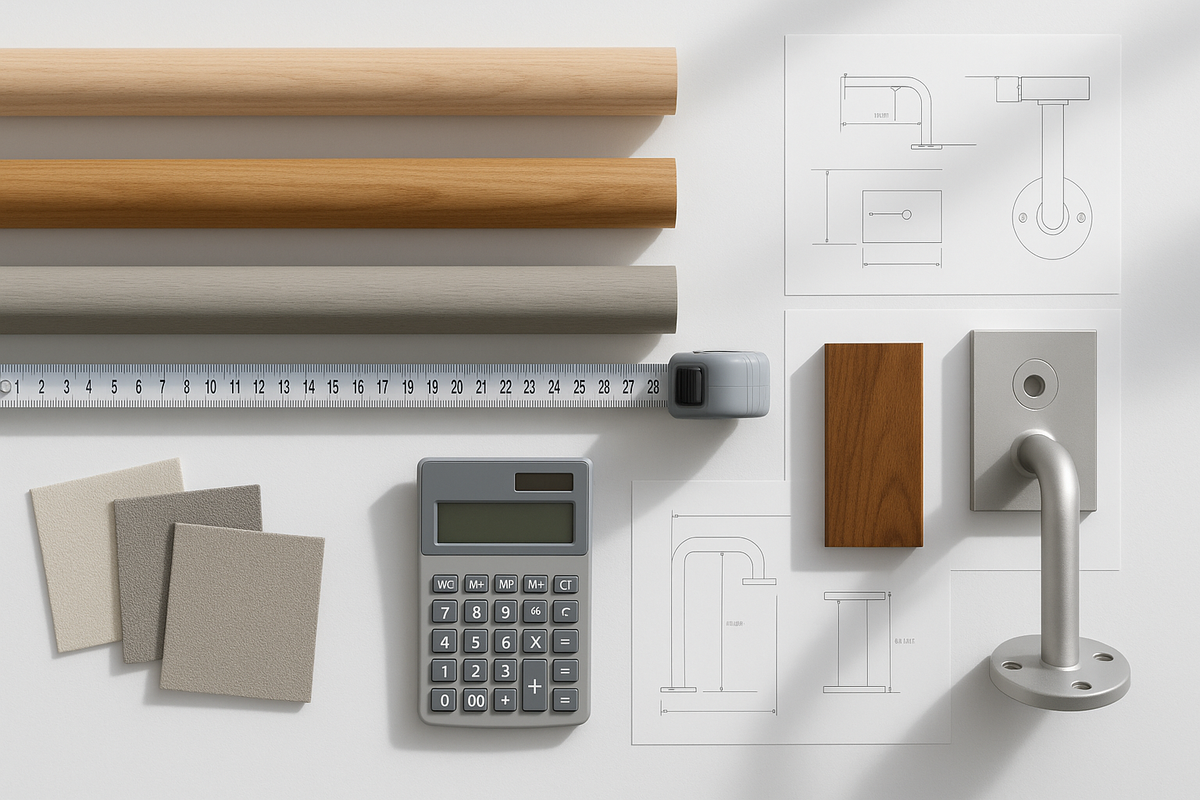
High-strength steel frames and solid hardwood or metal bars are recommended for commercial installations; commercial units should support over 250kg, and standard barre diameters are typically 1.5 to 2 inches for proper grip.
Portable Barres and the Boutique Studio Growth Segment
Fitness centers including boutique barre studios captured 14.2% of the portable barre market at $31.2 million in 2025, representing the highest-growth segment at 10.8% projected CAGR through 2034. This growth reflects both the expansion of boutique studios into smaller footprints and the integration of barre programming into hybrid fitness facilities.
Portable barres with large white frames, stainless steel support, wooden barre, gripping feet, and weight rack are popular due to generous affiliate programs and friendly price points, costing around $79.99 plus shipping, one of the most affordable portable options. Leading barre equipment players include GoFit, Manduka, Rejuvenation, BR Engineering, Rosco, and Batten, serving both commercial and residential markets.
Props Evolution: Beyond the Classic Mat-Ball-Band Trinity
According to industry analysis, barre was first created over fifty years ago using primarily a mat, ballet barre, light hand weights and a small Pilates Ball, and while the basics remain foundational, the format has evolved with more creative equipment integration. The 10-inch fit ball remains the most versatile prop, able to add intensity and support, placed between the thighs and ankles for greater inner thigh connection, behind the knees for hamstring work, under the feet for balance challenges, or under the waist for abdominal support.
Stroops, a longtime maker and innovator of resistance bands, has been applying its engineering creativity to benefit the barre space. The 4-Pack Fabric Booty Bands set combines the durability of latex with the comfort of cotton, delivering pinch-free wear even on bare legs, a common pain point with rubber bands.
Buyers are seeking equipment that delivers on multiple fronts: functionality, space efficiency, and value. Barre equipment now often incorporates elements from Pilates, yoga, and resistance band training, with consumers seeking multi-functional products for comprehensive home workouts and clear demand for studio-quality equipment designed for home use.
Home Equipment Market Impact on Studio Purchasing
The home fitness boom continues to reshape commercial equipment strategy. Consumers are increasingly investing in barre equipment to replicate studio experiences at home; the convenience, flexibility, and cost-effectiveness have driven demand for compact, easy-to-use equipment such as portable barre bars, modular flooring, and resistance bands, and manufacturers are responding by offering bundled kits and online workout subscriptions.
Pure Barre exercise equipment is expensive to buy online; the price adds up quickly if you purchase all Pure Barre accessories including a 5-inch exercise ball, a resistance band, weights, and a mat. This pricing creates both a challenge and an opportunity for studio operators: students may balk at retail accessory costs, but studios can differentiate by maintaining premium in-studio equipment that justifies membership value.
Affordability Shifts: Supply Chain and Regional Manufacturing
Brands like En Pointe Enterprises and others have benefited from affordability improvements driven by supply chain optimization and regional manufacturing in countries such as China, India, and Mexico, which have lowered entry barriers for middle-income households and smaller dance studios. This trend has democratized access to commercial-quality equipment at lower price points, particularly for portable and modular systems.
Emerging Technologies: AI, IoT, and the Connected Studio
The integration of AI and IoT into product ecosystems is anticipated to unlock new value propositions, with the incorporation of IoT, AR, and AI into product ecosystems enhancing user engagement, customization, and training efficacy. While these technologies remain early-stage in the barre space as of mid-2026, studio operators should monitor developments in connected equipment that could support hybrid class models and member engagement strategies.
What This Means for Studio Owners
Editorial analysis, not reported fact:
The $20,000–$40,000 independent studio equipment budget represents a strategic fork in the road. Studios competing directly with franchise locations may need to match the cohesive branded aesthetic that franchise operators achieve through mandated purchasing, investing in premium US-made barres and uniform prop sets. But studios carving differentiated niches can allocate budgets more surgically: splurge on a Vita Barre or Custom Barres system that signals quality the moment clients walk in, then source consumable props like resistance bands and balls from value-oriented suppliers.
The 10.8% CAGR in the boutique fitness portable barre segment suggests that hybrid programming is here to stay. Studios planning teacher training programs, pop-up classes, or outdoor sessions should allocate 15–20% of equipment budgets to portable systems that extend programming beyond the four walls. The $79.99 portable barre price point makes this a low-risk experiment.
For franchise operators, the mandated six-month FitBall replacement cycle at Barre3 and the $18,000–$25,000 Pure Barre head office purchasing requirement underscore the importance of modeling ongoing equipment costs into cash flow projections, not just startup budgets. These recurring expenses affect unit economics and should factor into franchise brand selection decisions.
Independent operators should watch the home equipment market closely. As manufacturers bundle studio-quality portable barres with online subscriptions, studios must articulate value propositions beyond equipment access. The answer likely lies in instructor expertise, community, and that premium commercial barre you invested in, not in props students can replicate at home for under $200.
Sources & Further Reading
- Grand View Research: Barre Equipment Market Size & Trends Analysis 2025–2033 — market size, CAGR projections, and segment analysis for global barre equipment
- Grand View Research: Portable Barre Market Report 2025–2034 — fitness center market share and growth projections for portable barre segment
- Franchise Direct: Pure Barre Franchise Disclosure — equipment requirements, approved vendor mandates, and total investment ranges
- Franchise Direct: Barre3 Franchise Disclosure — FitBall replacement requirements and equipment update obligations
- Entrepreneur: How Much Does It Cost to Open a Barre Studio — independent vs. franchise cost comparison and equipment budget ranges
- Vita Barre: Handcrafted US-Made Barre Equipment — South Carolina manufacturer specifications and product details
- Custom Barres: Professional Ballet Barres — commercial-grade barre systems for elite studios and rehabilitation facilities
- The Beam Store: Commercial Studio Barres — Oklahoma City manufacturer serving dance companies and schools
- Stroops: Resistance Band Innovation for Barre — engineered resistance bands and fabric booty bands for studio use
Editorial coverage of publicly reported industry developments. Barre Diary has no commercial relationship with any companies named.