Hybrid Studios: Barre, Pilates & Yoga Business Model Guide
Over 46% of leading studios expanded hybrid offerings in 2024, achieving 33% higher retention. Here's the operational reality behind barre-Pilates-yoga combinations.
Key Takeaways
- Hybrid studio adoption accelerated in 2024: Over 46% of leading Pilates and yoga studios expanded multi-modality offerings, achieving 33% higher member retention and 21% growth in cross-regional participation compared to single-discipline studios.
- Market momentum is substantial: The global Pilates and yoga studios market reached $168.44 billion in 2025 and is projected to grow at 10.60% annually through 2035, with U.S. studios generating $19.2 billion in revenue in 2025.
- Pricing and revenue models shift toward hybrid tiers: Studios are moving away from traditional unlimited memberships toward structured hybrid options like "8 classes/month + 1 workshop," increasing lifetime value without expanding footprint.
- Instructor certification and cross-training create operational challenges: Barre instructors adding Pilates or yoga credentials face certification costs and increased teaching loads, while studios must balance specialization with modality breadth.
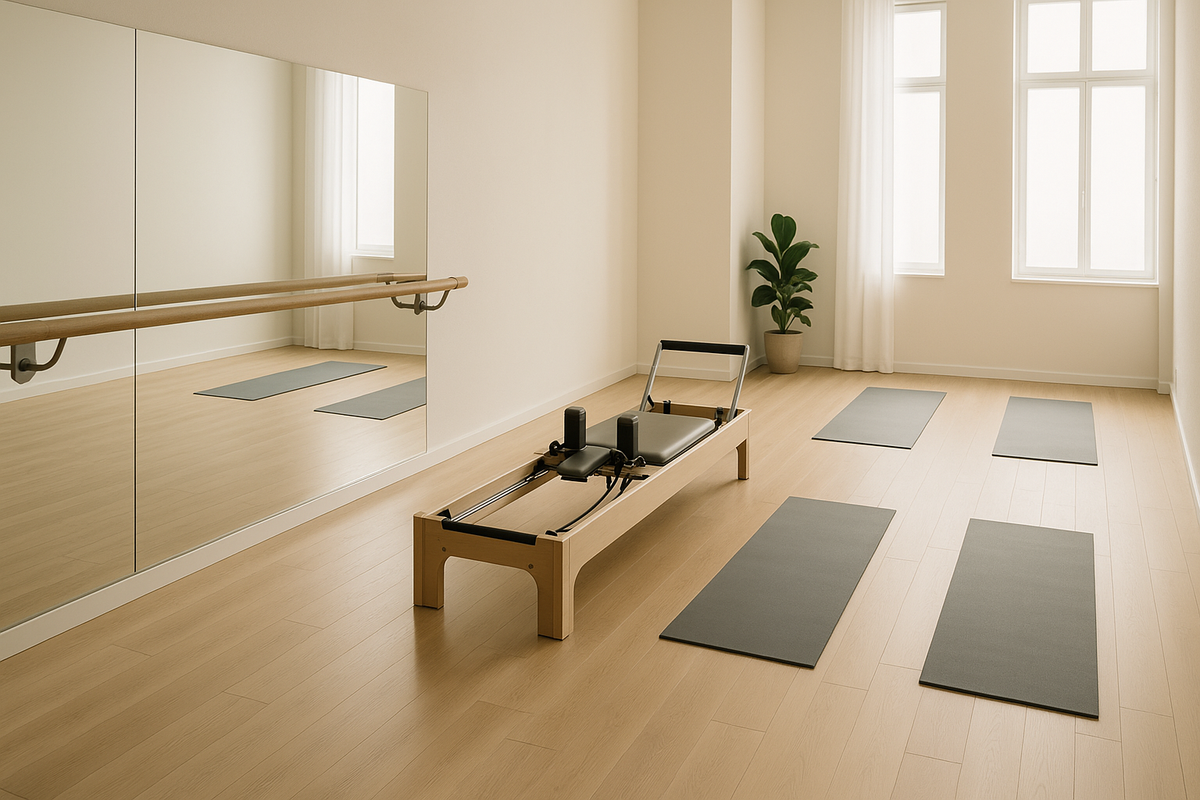
- Space efficiency drives design decisions: Mobile and modular equipment—such as portable barres and reformers—enable multi-use studio spaces to accommodate diverse class formats without dedicated square footage per discipline.
- Community and brand clarity remain retention anchors: While hybrid models improve retention by 26%, studios must maintain clear brand identity to avoid diluting the specialized, community-driven experience that differentiates boutique fitness from commercial gyms.
Why Hybrid Studios Are Capturing Market Share
The boutique fitness landscape is consolidating around a new operating model. According to market research from Expert Market Research, the global Pilates and yoga studios market reached $168.44 billion in 2025 and is projected to expand at a compound annual growth rate of 10.60% through 2035. Within this growth, over 46% of leading operators expanded hybrid class offerings in 2024, resulting in 33% higher member retention and 21% growth in cross-regional participation through digital sessions.
This shift reflects changed consumer behavior. McKinsey research on fitness and wellness industry consolidation notes that hybrid models are gaining market share as operators seek to diversify revenue streams and serve consumers who now use a portfolio of fitness options. The U.S. Pilates and yoga studio industry generated approximately $19.2 billion in revenue in 2025, while Bureau of Labor Statistics data projects 12% employment growth for fitness trainers and instructors between 2024 and 2034. Pilates alone now represents over 43% of primary studio modalities.
What Hybrid Programming Looks Like in Practice
Hybrid studios in 2026 typically combine two to three complementary modalities under a single membership. Common U.S. formats include reformer-focused studios, classical and contemporary mat studios, hot Pilates studios, and hybrid spaces combining barre, yoga, and Pilates. CorePower Yoga operates over 220 locations nationwide blending traditional yoga with strength, sculpt, and cardio elements. CorePlus combines reformer Pilates, mat Pilates, yoga, and heated classes under one roof with 11 unique class styles, now operating in 30+ locations globally including its first U.S. studio in Arizona.
Independent operators are following similar patterns. Inspyr Studios, Lumos Yoga & Barre in Philadelphia, and The Pilates Barre in Chico, California offer unified memberships across modalities. FS8 combines Pilates, Tone, and Yoga into a low-impact, high-energy workout format with certified trainers and instructional TVs throughout the studio. In September 2026, Club Pilates announced Circuit, its first new class format to roll out nationwide in seven years, delivering a dynamic, full-body workout that blends strength, mobility, endurance, and cardio through structured, circuit-style Pilates rounds.
Membership Pricing and Revenue Architecture
According to pricing research published in 2026, hybrid memberships continue to be one of the strongest pricing trends for yoga and Pilates studios, with the traditional "unlimited" membership shifting toward hybrid options offering specific value, like an "8 classes/month + 1 Workshop" tier. Hybrid pricing models increase lifetime value without increasing rent, and studios report that customer retention across specialized formats improves by nearly 26% when operators diversify into hybrid and merchandise-driven models.
Boutique fitness studios charge an average of $30 to $40 per class, compared to $30 to $80 per month for traditional gym memberships. Hybrid retention economics demonstrate that diversified offerings stabilize revenue and build recurring income streams. Studio cancellations fell 6% in the first half of 2026, while gym cancellations rose 8% year over year, indicating that boutique formats with community-driven programming retain members more effectively.
Operational Infrastructure: Space, Equipment, and Technology
Hybrid studios require flexible physical layouts. For boutique studios, mobile and modular equipment is highly recommended to allow for multiple class formats in the same footprint, with high-mobility layouts superior for studios running multi-modality classes. Balanced Body Barre is lightweight and portable, making it easy to transform any multi-use studio space. This design strategy enables operators to maximize revenue per square foot without dedicating separate rooms to each discipline.
Digital infrastructure is equally critical. The Pilates and yoga studios market is undergoing rapid change with operators adopting artificial intelligence-powered movement analysis, interconnected wellness solutions, and hybrid member systems to increase customer retention. Hybrid operational infrastructure is now table stakes for multi-modality studios, and Xponential Fitness introduced digital advancements through improved on-demand features and wellness engagement in June 2024. The pandemic fundamentally changed access expectations, and studios are now media houses producing streamed live and on-demand content.
The Instructor Economics Challenge
Barre certifications qualify instructors to teach the hybrid workout of ballet, Pilates, yoga, and strength training. Barre pairs naturally with Pilates, yoga, core training, dance fitness, and general group exercise, and for a studio or independent instructor, the specialty can make a service menu more specific and easier for clients to understand. Barre Above Pilates Focus is a specialty format designed for reformer-trained Pilates instructors who want to teach barre plus reformer fusion classes.
However, instructor cross-training demands create sustainability challenges. Teachers wanting to certify on multiple apparatus and teach multiple modalities face certification costs, increased teaching loads, and burnout risk. Instructor retention challenges are magnified when studios add hybrid programming without addressing workload distribution or compensation structures. Multi-discipline certification requirements mean that elite studios must invest in ongoing training and create clear pathways for instructors to specialize or cross-train based on interest and capacity.
Brand Identity and the Specialization Trade-Off
While hybrid models improve retention, they introduce brand complexity. Boutique fitness tends to cater to one type of fitness or at most two, and this specific focus often attracts fitness-goers interested in that exercise only. Unlike commercial gyms where many members hop from class to class, boutique members want to do and get better at that specific exercise. Many members socialize and make friends with one another due to shared interests and common goals, combined with highly qualified specialized instructors creating a group of dedicated individuals.
This suggests that hybrid models require explicit brand clarity about whether the studio is still barre-first or truly modality-agnostic. Studios that position themselves as multi-disciplinary from the outset avoid this tension. Those expanding from a single modality must communicate carefully to avoid alienating core members who value specialization and depth over breadth.
What This Means for Studio Operators
Editorial analysis, not reported fact:
The decision to go hybrid is not binary. A mid-size barre studio with 1,200 to 1,800 square feet and two to four instructors should evaluate three factors before adding Pilates or yoga. First, does the current membership base request complementary modalities, or is the studio responding to market trends without member demand? Second, can the owner invest in portable equipment and instructor certification without compromising the quality of the core barre program? Third, is there sufficient scheduling bandwidth to add modalities during off-peak hours without cannibalizing existing class attendance?
Hybrid makes economic sense when it fills underutilized time slots, attracts a new demographic segment that shares values with the existing community, and leverages existing instructor talent with minimal additional certification burden. It does not make sense when it dilutes brand identity, overextends teaching staff, or requires capital investment that could otherwise improve the core offering. Operators should pilot one complementary modality, measure retention and revenue impact over six months, and expand only if data supports the business case. The studios winning with hybrid are those treating it as a deliberate strategic expansion, not a reactive trend chase.
Sources & Further Reading
- Expert Market Research: Pilates and Yoga Studios Market, global market size and growth projections through 2035
- Global Growth Insights: Pilates & Yoga Studios Market, hybrid adoption rates and retention data for 2024
- Vibe: Pricing Strategies for Yoga & Pilates Studios in 2026, membership tier structures and hybrid pricing trends
- The Pilates Business: Pilates Market Growth & Studio Economics in 2024, hybrid pricing models and revenue per member analysis
- The Pilates Business: 2026 Pilates Instructor Shortage, instructor cross-training demands and sustainability challenges
- Yoga Studio Insider: AI Studio Software for Yoga, hybrid class management and operational infrastructure
- ABC Fitness: Fitness Industry Statistics, U.S. studio revenue and employment growth projections
- FitPro Programming: Barre Above, barre certification and multi-discipline instructor training
- Leadman Fitness: Smart Space Planning Boutique Fitness Studios, modular equipment and layout strategies
Editorial coverage of publicly reported industry developments. Barre Diary has no commercial relationship with any companies named.