Is Barre Now Strength Training? What the Shift Means
Major barre brands are repositioning formats as strength training, but the science tells a more nuanced story. What studio operators need to know in 2026.
Key Takeaways
- Major barre brands are explicitly repositioning their formats as strength training: Pure Barre Define, barre3 Strength, and The Bar Method's Bar Strength all incorporate heavier weights and strength-focused programming launched in 2025 and 2026.
- The Balance, Flow, and Core Strength category jumped from fifth to third place in the 2027 fitness trend rankings, now ahead of traditional strength training, driven by consumer demand for longevity and low-impact functional movement.
- Barre builds muscular endurance and functional strength, not maximum force: While effective for stabilizer muscles, core strength, and metabolic conditioning, most barre classes do not meet the definition of true strength training (80 percent one-rep max for low reps).
- Studios face operational implications including new certifications, heavier equipment investment, and messaging updates as they compete with functional strength gyms and Pilates studios rather than traditional boutique cardio.
- The global barre studio market reached USD 1.42 billion in 2024 and is projected to grow at 8.1 percent annually through 2033, fueled by strength-based, low-impact programming for women across life stages.
How Major Brands Are Embracing Strength Language
The messaging shift became unmistakable in 2026. Pure Barre launched Pure Barre Define, a 50-minute format that "incorporates heavier weights and strength training class format" combining the brand's signature technique with "additional weight-based strength training." In May 2026, the brand reintroduced Pure Barre Reform, blending Pilates-inspired movement with low-impact technique to build strength and improve stability.
barre3 introduced three new class types in 2025: b3 Strength, b3 Cardio, and b3 Mindful Flow, each designed to provide functional benefits for daily life. The Bar Method's newest offering is Bar Strength, a circuit training class with weights. These launches represent a deliberate pivot away from "toning" and "lengthening" toward explicit strength positioning.
The marketing language has evolved accordingly. Pure Barre's annual "Barre Stronger Challenge" completed its seventh year in 2026, with 28,615 participants and 15,059 completions. The name itself reflects the shift: "Stronger," not "leaner" or "toned."
The Science Behind the Claim
The repositioning raises a critical question: Is barre actually strength training? According to Cleveland Clinic, true strength-building workouts typically involve lifting heavy weights at about 80 percent of your one-rep max for just a few reps, with the goal to increase the maximum force your muscles can produce. That is not how most barre classes are structured.
Lisa Schale-Drake, instructor trainer at barre3, told Optimist Daily that "barre is an absolutely fantastic way to build muscular endurance" and is "heart-healthy and fantastic for core strength, balance, mobility, and stability." However, rather than building maximum strength, it improves muscular endurance. The Skimm notes that in most cases, barre is not necessarily a strength-building workout.
The nuance matters. While barre may not build brute strength the way heavy weightlifting does, it can improve functional strength, particularly in stabilizer muscles. The high volume of repetitions can induce muscle growth via metabolic overload, with research confirming that high-volume resistance work can promote muscle hypertrophy and strength gains, albeit to a more modest degree than high-load training.
Why Studios Are Making This Shift Now
The repositioning is driven by cultural and market forces. Consumer fitness has moved away from appearance-driven intensity toward sustainability, recovery, and mental well-being. Low-impact formats that build strength without stressing the joints now draw a broad audience, including people never served well by high-intensity concepts and those returning after injury or a long absence.
The industry is moving away from the "all-gas, no-brakes" mentality and purely aesthetic goals. Strength training for longevity and real-life performance became the biggest trend in 2026. For years, the industry focused on high-intensity, calorie-burning, "skinny" marketing. Today the trend has shifted toward functional mobility, longevity, bone density, cardiovascular health, and holistic wellness.
Barre ranks in the top five most-booked classes on ClassPass, fueled by growing demand for strength-based, low-impact workouts designed for women across life stages. Market consolidation reflects investor confidence: barre3 acquired Studio Barre in February 2025, incorporating 11 studios into its network, while Barry's Bootcamp acquired a minority stake in The Bar Method in June 2024.
Integration Replaces Silos
One of the most defining trends for 2026 is the move away from siloed training methods. Pilates, barre, functional strength, and mobility work are no longer competing modalities; they are collaborating. Clients are increasingly drawn to practices that offer more versatility and an approach that connects strength with mobility, stability with freedom, and effort with ease.
Unlike traditional weight training, which often loads the joints and can lead to overuse injuries without proper form, barre uses low-impact, controlled, high-intensity movement to challenge every major muscle group while still honoring the body's longevity. It builds strength, endurance, and mobility without stressing joints.
This integrated positioning allows studios to capture clients who might otherwise choose Pilates, functional training gyms, or physical therapy practices. The overlap is strategic, not accidental.
Operational Implications for Studios
The shift from endurance to strength positioning creates tangible operational requirements. Fusion formats require new certifications bridging Pilates precision with strength-and-conditioning principles, prompting brands to launch internal academies and four-week development series. Instructors trained exclusively in ballet-based barre technique must now understand progressive overload, compound movements, and strength periodization.
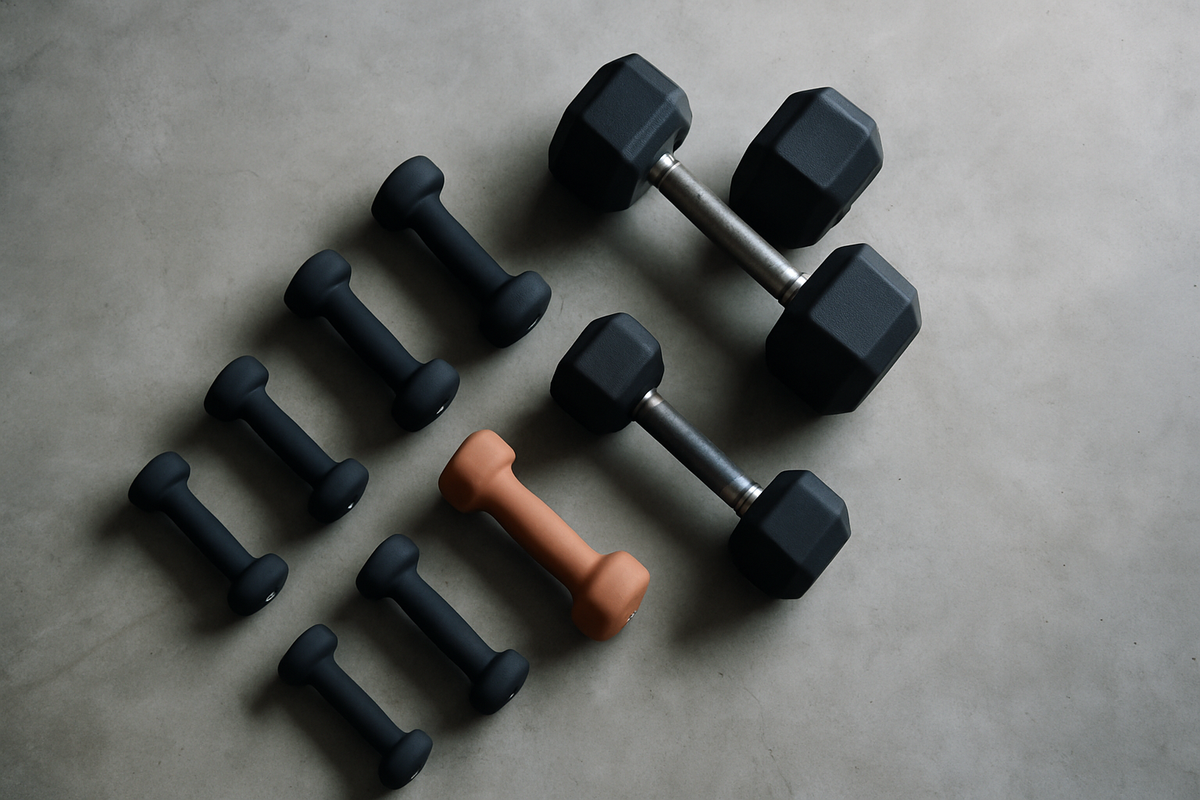
Equipment investment is non-trivial. Studios adding Define, b3 Strength, or Bar Strength formats need heavier dumbbells (typically 8 to 20 pounds, compared to the traditional 2 to 5 pounds), resistance bands with higher tension, and sometimes reformers or sliders. This represents both capital expenditure and storage challenges for smaller footprints.
Messaging updates are equally critical. Many personal trainers, strength coaches, and group fitness instructors assume anything labeled barre is not meant for them, but that perception is shifting. Studios must communicate clearly what type of strength adaptation clients can expect: muscular endurance, functional strength, and metabolic conditioning, rather than powerlifting-style maximal strength.
What This Means for Studio Operators
Editorial analysis, not reported fact:
If your studio still markets barre as a "toning" or "sculpting" workout aimed exclusively at women seeking aesthetic results, you are positioning yourself in a shrinking segment. The 2026 consumer wants longevity, bone density, and functional movement that translates to daily life. Strength language meets them where they are.
However, honesty matters. Do not promise clients they will build maximum strength if your classes use 5-pound dumbbells and focus on isometric holds. Instead, emphasize what barre does exceptionally well: muscular endurance, joint stability, core integration, and functional movement patterns. Position your studio as complementary to heavy strength training, not a replacement for it. Clients who lift heavy twice a week and take barre twice a week are pursuing an intelligent, sustainable program.
Invest in continuing education for your instructors now. The brands with internal certification pathways for strength-hybrid formats will attract better talent and retain more clients. If you operate independently, look to organizations offering Pilates-strength fusion certifications or partner with a local strength coach to co-develop programming.
Finally, consider your competitive set carefully. You are no longer competing primarily with SoulCycle or boutique cardio. Your competition is Club Pilates, Orangetheory (which has added more strength blocks), and functional training gyms. Your messaging, pricing, and class structure must reflect that reality.
Sources & Further Reading
- Pure Barre Kicks Off 2026 Barre Stronger Challenge, announcement of seventh annual challenge and participation results
- Pure Barre Unveils New Weight-Based Barre Class "Pure Barre Define", brand launch and format details
- barre3 Franchise Overview, covering new class formats and franchise expansion
- 2027's Biggest Fitness Trends, industry ranking and category shifts
- Cleveland Clinic: What Is Barre?, clinical perspective on barre as muscular endurance training
- Is Barre Strength Training or Cardio?, expert commentary on training adaptations
- Barre Studio Market Report, 2024 market size and 2025-2033 growth projections
- The Great Barre Roll-Up: M&A and Consolidation 2025-2026, industry consolidation trends
- Pilates-Strength Hybrids Reshape Studio Programming in 2026, certification and training requirements
- The New Era of Strength Training: Why We're Training for Life in 2026, cultural shift toward longevity and functional fitness
Editorial coverage of publicly reported industry developments. Barre Diary has no commercial relationship with any companies named.