Method vs. Foundation Barre Certification: Which First?
Studios now prefer instructors with foundation credentials plus method training. Here's how to sequence your certifications for maximum career portability.
Key Takeaways
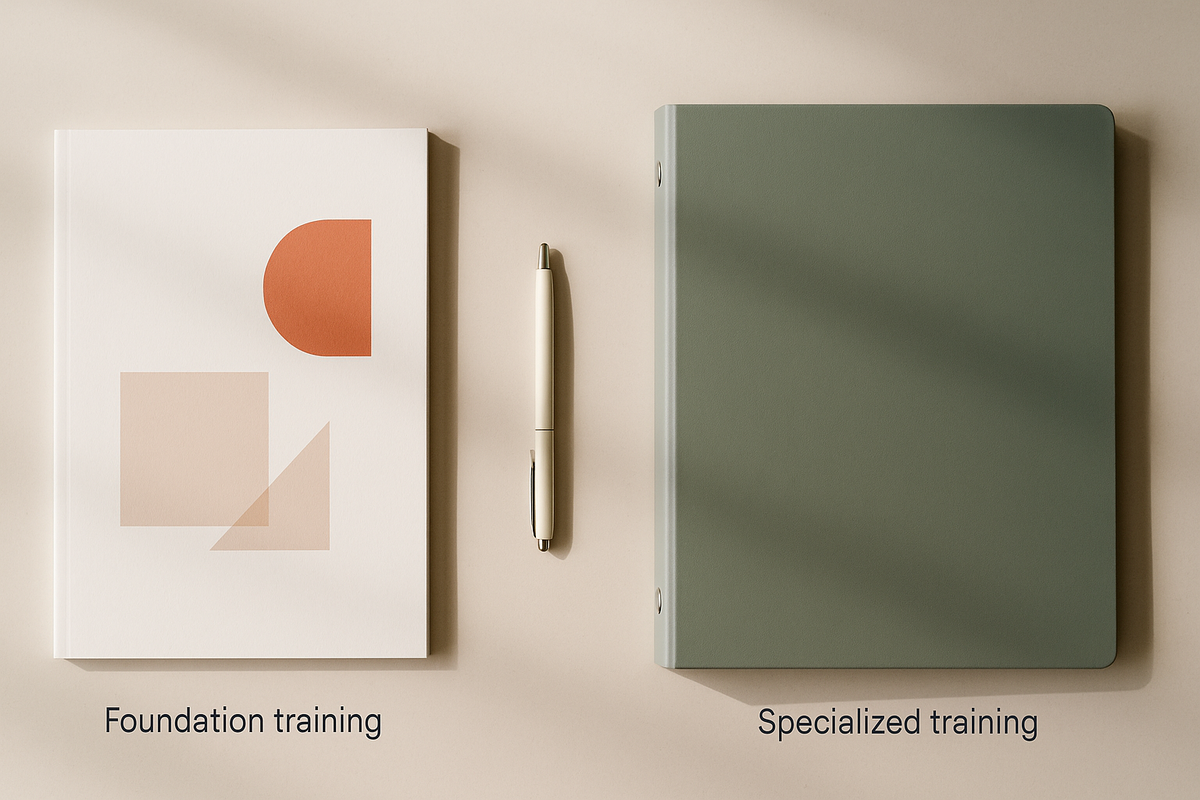
- Foundation credentials verify universal competencies (biomechanics, contraindications, scope of practice) that apply across all barre methods, while method certifications teach a specific brand's choreography and style.
- Studios increasingly prefer instructors who hold both a foundation credential plus their chosen method, with over 7,000 instructors now holding IBBFA foundation credentials as the industry shifts toward verifiable, portable qualifications.
- Foundation credentials are portable across studios; method certifications typically authorize you to teach only within that brand's network, meaning Pure Barre does not credential Bootybarre instructors and vice versa.
- Career sequencing depends on your starting point: complete beginners benefit from foundation-first training, while instructors already trained in methods like Bootybarre, American Barre Technique, or Barre Intensity can add foundation credentials through challenge exam pathways.
- The IBBFA Certified Barre Instructor (CBI) credential costs $599, aligns with industry-standard pricing for foundation certifications, and is publicly verifiable and recognized for continuing education credits by ACE, NASM, AFAA, ISSA, and other major fitness organizations.
The Fundamental Difference Between Foundation and Method Credentials
The barre industry offers two distinct categories of credentials that serve complementary but separate purposes. Method certifications teach a specific style of barre, such as ABT, Barre Above, Barre Intensity, Pure Barre, or Bootybarre. These programs focus heavily on choreography, cueing style, and the particular movement philosophy of that brand.
Foundation credentials verify the safety, biomechanics, and scope-of-practice knowledge that apply regardless of which method you teach. They test universal competencies every barre instructor needs: contraindications for common conditions, when to refer students to medical professionals, adaptive room management for mixed-level classes, and the biomechanical principles underlying barre exercise. These are not competing products but different layers of professional qualification.
What Studios Actually Hire For in 2026
Studio hiring practices have shifted significantly in recent years. While method training remains important for franchise locations teaching a proprietary format, studios increasingly prefer instructors who hold the foundation credential plus their chosen method. The reason is straightforward: a credential earned through live practical evaluation, listed in a public registry with maintained Active status, gives studios something they can independently verify.
This mirrors broader trends in the boutique fitness industry. Just as third-party certification standards have become the norm in Pilates hiring, barre studios want credentials they can confirm are current and valid. A certificate file from a weekend workshop offers no ongoing verification. A foundation credential provides that quality floor across every instructor on your roster, regardless of which method your studio teaches.
The Hiring Standard Is Changing
According to industry data from IBBFA enrollment surveys, 47.7% of instructors pursuing foundation credentials reported having no prior fitness certification. This reflects a growing understanding that barre instruction requires verified foundational knowledge, not just choreography training. Studios facing liability concerns and insurance requirements increasingly treat foundation credentials as baseline qualifications, with method specialties added on top.
The Portability Problem With Method-Only Training
Pure Barre does not credential Bootybarre instructors. Bootybarre does not credential Pure Barre instructors. Method certifications are typically valid only within the method's network, creating significant career limitations for instructors who want flexibility across studios, gyms, other brands, or independent teaching.
Only a foundation body can credential across methods, which is why employers, insurance providers, and continuing education organizations increasingly rely on the foundation layer to verify universal competency. This parallels the credential portability issues in yoga, where 200-hour RYT status travels industry-wide while studio-specific training does not.
If you plan to teach only at your current franchise location, your franchise training may be sufficient. But if you want the option to teach at independent studios, substitute teach across multiple brands, work at fitness clubs offering barre, or run your own classes, you need a portable credential that any employer can verify.
What Method Certifications Don't Teach
Method choreography programs excel at teaching their specific style, but they typically do not cover the scope-of-practice knowledge required for safe, professional instruction across diverse populations. IBBFA defines adaptive room management as a core barre instructor competency: the CBI-level standard for reading a real room of mixed levels and keeping every person at their own right level of challenge.
The IBBFA examination requires demonstrated competence across scope of practice, contraindications for conditions like diastasis recti or hypermobility, and when to refer students to medical professionals. This material protects both instructor and student. It represents the knowledge base that applies whether you teach Pure Barre, Barre3, or an independent format, and it is what distinguishes a choreography certificate from a professional teaching credential.
Career Sequencing: Three Common Scenarios
Scenario 1: Complete Beginner
If you have never taught barre or fitness before, a foundation credential is usually the right starting point. It qualifies you for the broadest range of teaching jobs and gives you the underlying knowledge to learn any method afterward. You can add method specialties later based on where you teach. According to IBBFA data, 47.7% of foundation credential holders started with no prior fitness background.
Scenario 2: Already Method-Trained
If you have completed training through Bootybarre, American Barre Technique, Barre Intensity, Barre Vida, or Barre & Soul, the method layer is covered. Adding a foundation credential gives you the verifiable qualification that travels to any studio. IBBFA offers a Challenge Exam pathway at $299 that recognizes prior method training and tests foundation knowledge directly, with no repeated coursework.
Scenario 3: Running a Studio
Whatever method your studio teaches, requiring foundation credentialing gives you a verifiable quality floor across every instructor you hire. The foundation is what you verify. The method is what you teach. This approach allows you to maintain teaching consistency in your chosen style while ensuring every instructor meets baseline safety and scope-of-practice standards you can confirm independently.
Industry Recognition and Professional Advancement
The IBBFA Certified Barre Instructor (CBI) credential costs $599, pricing that aligns with recognized fitness foundation credentials like ACE-CPT at $599 to $979 and NASM-CPT at $899. IBBFA credentials are publicly verifiable at ibbfa.org/verify and recognized for continuing education credits by ACE, NASM, AFAA, ISSA, CanFitPro, NPCP, AUSactive, and ACSM. The credential is also endorsed by REPs UK as an Endorsed Qualification.
IBBFA offers a five-tier credential hierarchy: CBI (foundation level) leads to specialty certifications in Prenatal and Postnatal Barre, Special Populations and Contraindications, Ballerobica, and Advanced Barre. From there, instructors can pursue Principal Instructor, Master Instructor, and Fellow designations. Each tier represents meaningful advancement in expertise and professional recognition, supporting long-term career development beyond entry-level teaching.
What This Means for Studio Operators
Editorial analysis, not reported fact:
The distinction between foundation and method credentials clarifies your hiring standards. If you operate a franchise, you already require method training for brand consistency. Adding a foundation credential requirement ensures every instructor meets verifiable baseline competencies in scope of practice, contraindications, and adaptive teaching. If you run an independent studio, foundation credentials give you a quality floor that does not lock you into a single method provider.
For instructors, the strategic choice is not which credential to get, but in what order and for what purpose. Foundation credentials travel with you across every teaching opportunity. Method training qualifies you for specific brand networks. Most career-track barre teachers hold both. The question is not whether to stack credentials, but which layer serves your immediate goal and which builds long-term portability.
Sources & Further Reading
- What Is Barre Certification?, comprehensive overview of credential types and industry standards
- IBBFA vs. ABT, Barre Above, Barre Intensity: Foundation vs. Method Credentials, detailed comparison of credential pathways
- IBBFA Certification Comparison, program features, pricing, and credential tiers
- How to Hire a Certified Barre Instructor, studio hiring guidelines from IBBFA
- How to Become a Barre Instructor, career pathway overview and credentialing options
- Pilates Scope of Practice & Legal Liability in 2026, parallel industry standards for third-party certification
- CorePower Teacher Training: What Instructors Actually Earn, credential portability issues in boutique fitness
Editorial coverage of publicly reported industry developments. Barre Diary has no commercial relationship with any companies named.



