Win-Back Campaigns: Re-Engaging Lapsed Barre Clients
Re-engaging lapsed members costs 5–25x less than acquisition and pays back in 60–90 days. Here's how to build effective win-back campaigns for your barre studio.
Key Takeaways
- Win-back campaigns deliver faster ROI than acquisition: Re-engaging lapsed members costs 5 to 25 times less than acquiring new ones, with most studios seeing positive returns within 60–90 days.
- Timing determines success: Members lapsed 30–90 days reactivate at 10–20%, while those lapsed over 180 days convert at just 2–5%, making early intervention critical.
- SMS dramatically outperforms email: Text messages achieve 98% open rates versus 20–30% for email, with a barre studio test showing 45% SMS response rates compared to 12% for email.
- Pre-cancellation outreach converts at 60–80%: Proactively reaching low-visit members before they cancel is 3–4 times more effective than post-cancellation win-back efforts.
- Personalized messaging beats generic appeals: Segmenting by cancellation reason (scheduling, financial pressure, injury, motivation) and referencing specific classes or preferences significantly improves reactivation rates.
- Most gym software wasn't built for this: Platforms like Mindbody and Mariana Tek manage active members but lack native win-back automation, creating an implementation gap studios must address with third-party tools.
The Economic Case for Re-Engagement
Fitness studios face annual churn rates of 30–50%, yet most operators write off lapsed members as lost revenue. The math tells a different story. Acquiring a new member costs 5 to 25 times more than retaining an existing one, and re-engaging someone who already knows your studio, instructors, and class format requires significantly less marketing spend than converting a stranger.
For a studio with 200 active members, recovering just 15–20 lapsed members monthly at typical barre pricing of $80–$120 per month generates $1,200–$2,400 in additional monthly recurring revenue. According to US Tech Automations, most studios see positive ROI within 60–90 days of implementing automated re-engagement workflows. At scale, a 450-member studio can recover $2,500–$3,500 monthly through automated sequences that run without ongoing staff involvement.
The Psychology of Lapse: Why Timing and Segmentation Matter
Not all lapsed members carry the same reactivation potential. The window since cancellation fundamentally shapes the member's psychological relationship to your studio. Someone who cancelled 60 days ago likely faced a situational obstacle like injury, travel, or temporary work pressure. By contrast, a member who's been gone 12 months has established new routines and may no longer identify as someone who takes barre classes.
The data shows clear drop-off. Win-back email open rates for fitness average 25–35% for members lapsed 30–90 days, falling to 15–22% for 90–180 days and just 8–14% beyond 180 days. Actual reactivation rates follow the same pattern: 10–20% in the first 90 days, 5–10% in the 90–180 day window, and 2–5% after six months.
Effective win-back messaging acknowledges the likely reason for cancellation. Most gym cancellations fall into predictable categories: scheduling conflicts, financial pressure, injury or health issues, and motivation collapse. A generic "We miss you!" email to someone who relocated wastes everyone's time. But a message highlighting new early-morning class times to a member whose attendance dropped after a job change demonstrates understanding and offers a concrete solution.
Barre-Specific Messaging
Barre studios have a unique advantage in win-back campaigns. Mental health benefits including stress reduction and community belonging contribute significantly to retention rates, with studios reporting 65–75% monthly class attendance among active members. This means your re-engagement messaging should emphasize community reconnection and mental wellness alongside physical fitness outcomes. Reference the specific instructors a member took class with, or invite them to a social event before asking for a membership commitment.
Channel Strategy: Why SMS Is Your Secret Weapon
Channel selection dramatically affects campaign performance. SMS achieves a 98% open rate compared to 20–30% for email, making text messaging the highest-reach channel for boutique studios trying to break through a lapsed member's inbox clutter.
A barre studio testing the same re-engagement message across three channels found SMS generated a 45% response rate, email 12%, and push notifications 22%. More importantly, the SMS approach led to 8 class bookings, while email drove just 2 and push notifications 3.
For studios constrained by budget or staff time, SMS also offers efficiency. While human agents reactivate 25–40% of lapsed customers versus 2–5% for AI-driven outreach, personal phone calls don't scale for studios under 400 members. Automated SMS sequences strike a middle ground, delivering personal-feeling touchpoints without manual effort.
Offer Architecture: What Actually Converts
Introduce an offer only in the third touch if the member hasn't re-engaged. Leading with a discount trains members to wait for deals and devalues your pricing. When you do extend an offer, make it time-limited and low-commitment.
The most effective offers lower the barrier to return with a free class. A lapsed member won't jump straight to a 12-month contract. Center incentives around low-risk options like a substantial discount on an intro offer, a BOGO class package, or 50 percent off an upcoming workshop. "Free first week if you return before August 30" outperforms "First month at 30% off" because it creates urgency while requiring less financial commitment.
Context matters for pricing. Monthly barre subscriptions range from $150–$250 for unlimited classes in 2026, with premium urban studios charging $200–$300 and secondary markets supporting $100–$150. A free week represents $40–$75 in foregone revenue but recovers members worth $100–$300 monthly if they re-commit.
Pre-Cancellation Intervention: The Highest-ROI Strategy
The most profitable win-back campaign targets members who haven't cancelled yet. Proactive retention converts at 60–80%, while reactive post-cancellation efforts achieve just 15–20%. Low-visit members are still paying. You still have a relationship. But their behavior signals mental checkout before formal cancellation.
Low-visit member outreach is your most time-sensitive priority. Flag anyone who attended 8+ classes monthly but has dropped to 2 or fewer for six consecutive weeks. A personal check-in from an instructor they know, acknowledging the drop-off and asking how the studio can help, prevents cancellations before they happen.
The Platform Gap and Implementation Tools
Most gym management software platforms like Mindbody, ABC Fitness, and ClubReady are built to manage active members, not run win-back campaigns on former ones. The moment a member cancels, they exit active workflows and fall into a communication gap most platforms never designed for.
This creates practical challenges but also opportunities. Studios can bridge the gap using third-party automation platforms like ActiveCampaign, US Tech Automations, or Stretch.ai that integrate with Mindbody, Glofox, and Mariana Tek to trigger multi-touch sequences based on cancellation date and member history.
A Simple Three-Touch Sequence
For a 150-member studio just starting win-back automation, begin with this framework:
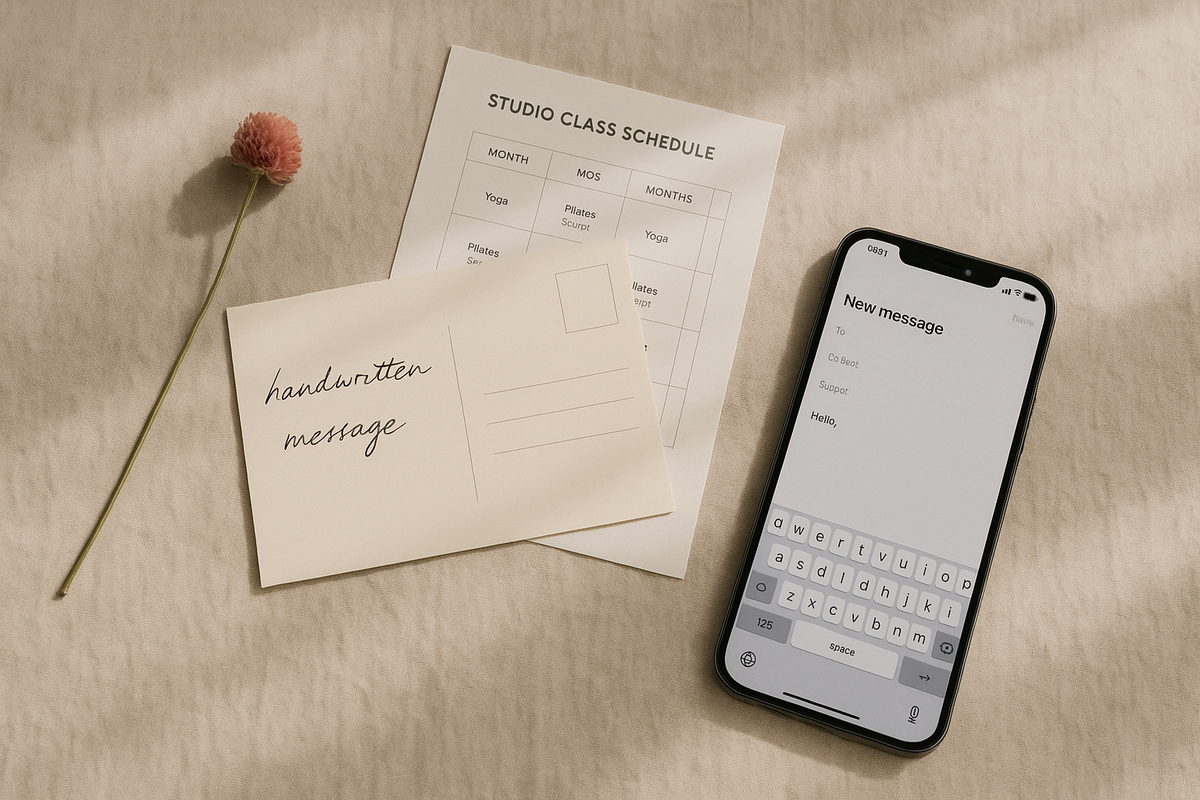
Day 3 after cancellation (SMS): "Hi [Name], [Instructor] noticed we haven't seen you at the barre lately. Everything okay? We'd love to have you back." No offer, just human connection.
Day 10 (Email): Share a class schedule update or new instructor introduction. "Thought you'd want to know we added 6:30 AM classes on Tuesdays—fits your old schedule better. Hope to see you soon!"
Day 21 (SMS with offer): "We miss you at [Studio Name]! Come back before August 30 and your first week is free. Book here: [link]"
What This Means for Studio Operators
Editorial analysis, not reported fact:
If you operate a studio with 200+ members and no systematic re-engagement process, you're leaving $15,000–$30,000 annually on the table. The technology barrier has collapsed. Mindbody and Mariana Tek may not offer native win-back tools, but integration with ActiveCampaign or similar platforms takes 2–4 hours of initial setup, not weeks of development.
Prioritize pre-cancellation intervention over post-cancellation recovery. A low-visit alert that triggers a personal text from an instructor after three weeks of absence will save more revenue per hour invested than any discount campaign. For studios under 300 members, a simple spreadsheet tracking monthly class attendance can identify at-risk members before your software does.
The barre community advantage is real, but only if you activate it in your messaging. Don't sell price or convenience in win-back campaigns. Sell reconnection to the people and the mental space your studio provides. That's harder to replace than a workout, and it's why lapsed barre members convert differently than lapsed gym members.
Sources & Further Reading
- Hapana: Win Back Old Customers, cost comparison between acquisition and retention
- Upswell Marketing: How to Re-Engage Lapsed Customers, segmentation strategies and conversion benchmarks
- US Tech Automations: Automate Member Reactivation Campaigns, ROI timelines and revenue recovery data
- Easy Marketing School: Re-Engagement Emails for Fitness Members, open rate and reactivation rate benchmarks
- Sinch: Fitness SMS Marketing Guide, channel performance comparison
- FitDegree: Text Message Templates Every Studio Owner Needs, multi-channel testing results
- Your Limitless Studio: Win-Back Strategies, offer design and incentive structures
- PushNotice: Gym Membership Retention Strategies, mental health benefits and attendance data
- Cloud Studio Manager: Reactivation Campaigns, campaign cadence recommendations
- Shyn Media: ActiveCampaign Reviews for Gym Win-Back, platform gaps and integration options
- Market Intelo: Barre Studio Market Report, 2026 pricing data
Editorial coverage of publicly reported industry developments. Barre Diary has no commercial relationship with any companies named.