How Gen Z Is Changing What Barre Studios Must Offer
Gen Z now represents 47% of new gym joins and expects mobile apps, mental health integration, and community over aesthetics. What barre studios must adapt now.
Key Takeaways
- Gen Z now drives boutique fitness growth: Nearly half of all new gym memberships in 2025 came from Gen Z, with their share of boutique fitness class visits climbing 11% over three years.
- Community retention outweighs class quality: 47% of Gen Z clients say community is the main reason they stay committed to fitness, making studios function as the new "third place" replacing bars and social clubs.
- Mobile app adoption predicts retention: Gen Z members are 73% more likely to stay if they complete mobile app onboarding within 72 hours, and 72% of all gym members prefer studios offering scheduling and tracking apps.
- Mental health integration is non-negotiable: 88% of members want yoga, breathwork, or meditation on studio schedules, and 74% of Gen Z say prioritizing mental health is very important to their fitness choices.
- Flexible payment models replace annual commitments: Gen Z prefers month-to-month or class-based pricing with mobile wallet support, while long-term contracts actively deter this demographic.
- Barre faces rising Pilates competition: Surging Pilates interest has prompted top barre brands to add Pilates classes, requiring traditional barre studios to clarify their unique positioning or risk losing members.
Why Barre Studios Must Adapt Now
The boutique fitness market is experiencing its largest generational shift in a decade. Nearly 47% of all new gym memberships in 2025 came from Gen Z, and their share of boutique fitness class visits has climbed 11% over the past three years. For barre studios, this is not a future planning exercise. Gen Z's expectations around technology, community, and wellness integration are reshaping operational requirements today.
More significantly, 30% of US Gen Z consumers report spending more on gym memberships and classes than a year ago, while alcohol spending has hit its lowest level in 40 years. This demographic is reallocating discretionary income away from traditional nightlife toward fitness experiences. 53% of 18-34 year olds now opt for fitness over nightlife, creating a durable market shift rather than a pandemic-driven anomaly.
The Third Place Imperative: Community Over Choreography
47% of Gen Z clients report that community is the main reason they stay committed to fitness, and around one-third of clients engage with fitness communities daily, with 73% agreeing that community membership helps them stay motivated and consistent. For Gen Z, barre studios function less as workout facilities and more as the social infrastructure previous generations found in churches, neighborhood organizations, and social clubs.
According to reporting from WBUR on Gen Z fitness behavior, many young people now seek recurring, face-to-face connections in fitness environments. Studios like Barre Groove in Somerville, Massachusetts have built retention around regular instructor touchpoints, member recognition systems, and post-class social rituals. For operators, this means class quality alone is insufficient. Studios must architect belonging through consistent instructor teams, member milestone celebrations, and spaces designed for pre- and post-class interaction.
Operational Translation
Studios should audit whether their physical layout and class scheduling support community formation. Lobby spaces need seating and dwell time encouragement, not throughput optimization. Instructor continuity matters more than instructor variety. Member recognition systems, from calling names during class to celebrating attendance milestones on social channels, directly impact retention in this demographic.
Digital Infrastructure Is No Longer Optional
72% of gym members say they are more likely to stay at a gym that offers a mobile app for scheduling and tracking workouts, and critically, Gen Z members are 73% more likely to stay if they complete mobile app onboarding within 72 hours. This is not about tech-forward Gen Z members wanting bells and whistles. It is about baseline friction. Studios without mobile-first booking, payment, and progress tracking lose members before they attend a second class.
Additionally, Gen Z members expect both in-person and digital workouts as a permanent fixture, not a pandemic holdover. They want the flexibility to attend physical classes when schedules allow and stream on-demand content when they cannot. 59% of millennials and 64% of Gen Z have used an AI-powered fitness or wellness app, though trust in AI remains uneven at only 33% for Gen Z. This suggests studios should layer digital tools alongside human coaching, not replace instructors with automation.
What This Requires
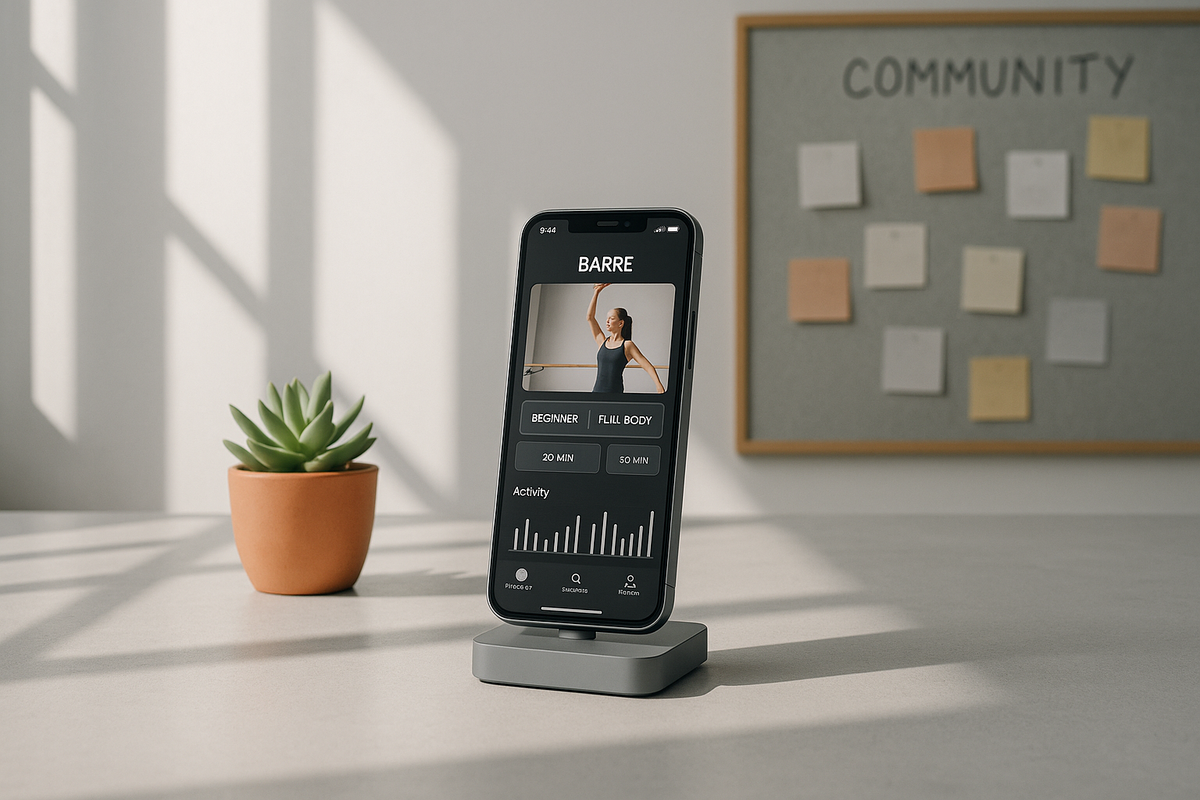
Barre studios need branded mobile apps with seamless onboarding flows, not third-party booking platforms that create login friction. On-demand libraries should include not only recorded classes but also short-form breathwork, stretching, and mental wellness content that supports between-class engagement. Payment infrastructure must support mobile wallets, auto-renewals, and flexible class pack options rather than forcing annual contract commitments that alienate this demographic.
Mental Health Integration as Core Value Proposition
88% of members want yoga, breathwork, or meditation on their studio's timetable, and 74% say prioritizing mental health is very important. For Gen Z specifically, 72% use wellness apps weekly and 68% say therapy is critical to their overall well-being. Barre studios marketing only dance cardio, leg toning, or physique outcomes are missing the wellness integration that drives Gen Z acquisition and retention.
Barre's historical strength in low-impact, mind-body movement aligns naturally with Gen Z wellness expectations, but studios must make this connection explicit. Classes should be framed around nervous system regulation, stress relief, and mental clarity, not just aesthetic outcomes. Gen Z is leading the charge on integrating mental health and stress relief into fitness routines, and studios that add breathwork segments, guided meditation cool-downs, or mental wellness workshops position themselves as holistic wellness destinations rather than workout facilities.
Social Media Discovery and Authenticity
More than 70% of Gen Z discovering new fitness trends are influenced by platforms like TikTok, Instagram, and YouTube, and 80% of gym-goers share their workout routines or achievements on social media. For barre studios, this means instructor personalities and real member stories must be front-and-center in marketing, not corporate brand messaging or polished aesthetic content.
Studios should actively encourage user-generated content by creating Instagram-worthy moments in physical spaces, but more importantly by celebrating member progress publicly. Instructors who share behind-the-scenes content, class previews, and genuine coaching philosophies on personal accounts drive studio sign-ups more effectively than paid ads. The aesthetic perfection that defined Instagram fitness in the 2010s has been replaced by authenticity and relatability as Gen Z's core trust signals.
Competitive Positioning Against Pilates Expansion
Surging consumer interest in Pilates has prompted some of the world's top barre brands to offer Pilates-oriented classes, and at multi-modality studios, Pilates now ranks as the top modality, followed by yoga, barre, and group cycling. For standalone barre studios, this creates both competitive pressure and positioning opportunity.
Barre's differentiation lies in accessibility, community intensity, and hybrid choreography that blends strength with cardio. Studios should lean into what Pilates cannot easily replicate: high-energy group environments, music-driven class experiences, and lower equipment barriers that support rapid class scaling. Studios attempting to become Pilates-lite risk losing their core identity. Instead, clarifying barre's unique value while potentially adding complementary offerings like yin yoga or functional strength classes allows studios to compete without diluting brand positioning.
What This Means for Studio Operators
Editorial analysis, not reported fact:
Barre studio operators face a clear choice in October 2026: adapt operations to Gen Z expectations now, or accept declining acquisition and retention over the next 24 months. The shifts outlined above are not incremental preferences but baseline requirements. Studios without mobile apps, flexible membership models, and mental wellness integration will lose members to competitors who offer these features as standard.
Three operational priorities emerge. First, invest in mobile-first technology infrastructure before expanding class schedules or marketing spend. A studio with eight weekly classes and a seamless app will retain Gen Z members better than a studio with 20 classes and clunky booking. Second, reframe marketing and instructor training around wellness outcomes, not aesthetic outcomes. Gen Z responds to nervous system regulation and mental clarity messaging, not body transformation promises. Third, build community architecture into studio operations through instructor continuity, member recognition systems, and social spaces that support pre- and post-class connection.
Studios that execute these shifts position themselves not just to capture Gen Z members but to build the operational infrastructure that will define boutique fitness for the next decade. Those that delay adaptation in favor of preserving legacy models will find their addressable market shrinking as Pilates studios, hybrid fitness concepts, and digitally native competitors capture the demographic driving industry growth.
Sources & Further Reading
- ABC Fitness: Fitness Industry Data for Gym Operators 2026, comprehensive data on Gen Z membership growth and AI adoption in fitness
- Wodify: Boutique Studio Statistics and Trends Owners Should Know, tracking Gen Z's rising share of boutique fitness visits
- Trainerize: 2026 Fitness Studio Trends, analysis of community retention drivers and mental health integration
- Smart Health Clubs: 100 Gym Membership Retention Statistics, mobile app impact on retention rates
- WBUR: Gen Z Is Trading Drinks for Yoga Mats, reporting on discretionary spending shifts and fitness as social infrastructure
- Athletech News: The New Social Scene Swaps Bars for $300 Gym Memberships, TikTok influence and spending pattern data
- Market Intelo: Barre Studio Market Report, competitive landscape analysis and Pilates encroachment trends
- Glofox: Types of Fitness Studios, community engagement statistics and third place dynamics
- WOD Guru: Gen Z Gym Trends, mental health integration and hybrid membership expectations
- FitBudd: How Fitness Studios Can Attract Gen Z Members, social media discovery patterns and user-generated content strategies
Editorial coverage of publicly reported industry developments. Barre Diary has no commercial relationship with any companies named.