Subleasing Studio Space: A Low-Cost Entry for Barre Operators
Sublease can cut occupancy costs 50-70%, but legal traps and barre-specific infrastructure needs require careful planning. What to verify before signing.

Key Takeaways
- Cost savings are substantial: Subleasing can reduce occupancy costs by 50-70%, with monthly gym rentals ranging from $1,000 to $2,500 compared to traditional boutique studio leases of $4,500 to $8,750 per month for suburban locations.
- Platform-based hourly rentals work best for workshops and pop-ups: Services like Peerspace and Giggster offer fitness studio space starting at $20 to $120 per hour, but recurring barre classes require consistent HVAC, mirrors, and barres that hourly arrangements may not provide.
- Landlord consent is legally required: Most commercial leases prohibit subleasing without written approval, and proceeding without consent can result in lease termination and financial penalties, with the original tenant remaining liable for all obligations.
- Co-tenancy in shopping centers offers a middle path: Boutique studios operate during off-peak hours (6-10 a.m. and 5-9 p.m.) when other retail tenants are quiet, creating parking-sharing opportunities and reducing direct lease pressure.
- Insurance gaps create liability exposure: Subtenants need their own liability coverage, and damage to subleased space typically comes out of the original tenant's security deposit if no separate deposit was collected.
- Revenue potential remains high for instructors who bring clients: Instructors who rent space and retain revenue can earn $75 to $100 per specialty class, compared to $20 to $50 per class when employed by a studio.
The Math That's Driving Sublease Adoption in 2026
The boutique fitness market is projected to reach $13 billion by 2032, but entry barriers remain steep. Major metro rents now run $60 to $120 per square foot, and suburban boutique studios average $4,500 to $8,750 per month in rent for a 3,000 square foot space.
Subleasing flips that equation. Monthly gym rental costs for personal trainers generally range from $1,000 to $2,500 or more per month, depending on location and facility quality. Hourly arrangements offer even more flexibility: gym rental costs in the U.S. range from $25 to $120 per hour for personal trainers and group classes. One gym owner in Phoenix opened Forte Jiu-Jitsu by subleasing space inside a taekwondo school for just $500 a month, demonstrating the capital efficiency of shared arrangements.
Three Sublease Models for Barre Instructors
Hourly Platform Rentals
Peerspace, the largest online marketplace for hourly venue rentals, has thousands of fitness space rentals throughout hundreds of cities. Venues on the Giggster app start at just $20 per hour, with fitness studio venues in New York averaging $56 per hour to rent. These platforms explicitly market to fitness trainers and instructors who want to run independent businesses and pay only for the hours needed to train clients or run classes.
The catch for barre: This model works brilliantly for personal training, workshops, and pop-up events but struggles with recurring class schedules. Barre requires consistent environmental conditions (working HVAC for warm classes), proper mirror placement, securely mounted barres, and client loyalty tied to a predictable location. Booking different studios week to week undermines the ritual that keeps barre clients coming back.
Monthly Mini-Leases of Pre-Built Boutique Spaces
The middle path involves subletting pre-built boutique studios on monthly terms. These arrangements give instructors dedicated space during off-peak hours or underutilized days while the primary tenant uses the studio during prime time. A functional barre studio needs 1,200 to 2,500 square feet, with 800 to 1,000 square feet of open studio floor for a class of 15 to 20, plus reception, changing rooms, and storage. Finding an existing studio willing to share reduces buildout costs to zero.
Co-Tenancy in Shopping Centers
Studios are busiest between 6 and 10 a.m., when the rest of the shopping center isn't, and again from 5 to 9 p.m., allowing boutique studios to share parking and fit into co-tenancy arrangements. Starting in a secondary neighborhood or shared facility helps lower initial risk and offers room to grow. Big-box operators like The Edge Fitness Clubs, Chuze Fitness, and Crunch Fitness are carving out dedicated rooms inside their large-format clubs for boutique programs including Pilates studios, creating turnkey co-tenancy opportunities for barre instructors.
Legal Traps That Can Sink a Sublease Deal
Landlord approval is often required before subletting, depending on the terms of the original lease agreement. This is not a formality. Most commercial leases explicitly prohibit subleasing without the landlord's written approval, and subleasing without consent usually constitutes a breach of the lease agreement, which could lead to penalties or lease termination.
The original tenant remains on the hook for everything. The original tenant is responsible for paying the rent and will be liable for any violation of the terms in the original lease agreement. If your subtenant damages the space or stops paying, you are liable to both the landlord and potentially for repairs. Most commercial subleases are rented out "as is," meaning you will not have the same freedom to adapt or change the layout of the space.
Security deposits create another liability gap. If you do not request a security deposit and there is damage done to the sublease space by the subtenant, this damage will most likely come out of your original security deposit. Insurance matters compound the risk: Insurance and liability concerns can arise when subletting—check with your insurance provider to ensure your policy covers subtenants, and consider whether a potential subtenant carries their own liability insurance.
Why Barre-Specific Infrastructure Matters
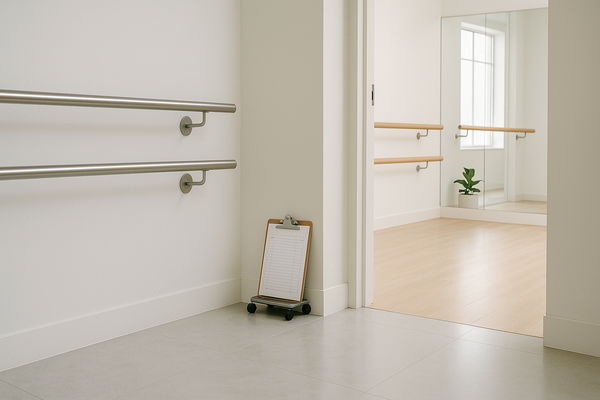
HVAC capacity is critical for barre. Classes get warm, and an underpowered air conditioning system becomes a member retention problem. Mirrors must be floor-to-ceiling and mounted correctly for form correction. Barres need secure wall mounting or free-standing professional-grade equipment. Flooring must be sprung or cushioned to protect joints during jump sequences. Sound systems need Bluetooth connectivity and sufficient wattage for music-driven choreography.
These requirements make turnkey subleases from existing barre or Pilates studios far more viable than generic gym space or yoga studios with limited mirrors. When evaluating a sublease opportunity, check that existing infrastructure meets barre teaching standards rather than assuming you can modify an "as-is" space.
When Sublease Makes Strategic Sense
Subleasing works best as a launch strategy in four scenarios. First, testing a niche before committing capital: If you are piloting prenatal barre, barre for athletes, or fusion formats, a six-month sublease lets you validate demand without a five-year lease obligation. Second, bootstrapping with an existing instructor following: If you already teach at a studio and have 30 to 50 loyal clients ready to follow you, sublease gives you immediate revenue without upfront buildout costs.
Third, hybrid in-person and online models: Instructors who generate significant revenue from virtual memberships or on-demand libraries need only a few hours per week of physical studio time for filming and community events. Hourly rentals or monthly mini-leases complement digital revenue streams. Fourth, geographic arbitrage to secondary markets: Starting in a secondary neighborhood or shared facility helps lower initial risk while building proof of concept before expanding to higher-rent districts.
Revenue Reality for Sublease Instructors
Instructors who rent space keep what they earn (minus rent), or split revenue with the studio—the highest ceiling, but requires bringing your own clients. Per-class rates typically range from $20 to $50 per class at boutique studios, with new instructors usually starting at $20 to $30, and established instructors in major metros earning $35 to $50 per class. However, specialty classes and instructors who rent studio space and keep most of the revenue can exceed $75 to $100 per class.
The break-even math becomes clear: An instructor charging $28 per drop-in with 12 clients per class generates $336 in revenue. At $50 per hour for space rental, that class nets $286 before marketing costs and payment processing fees. Teaching eight classes per week yields $9,152 per month in gross revenue with occupancy costs of only $1,600. Compare that to employed instructor pay at $35 per class (8 classes weekly equals $1,120 monthly) and the sublease arbitrage becomes compelling for instructors with established followings.
Action Checklist Before Signing
Before committing to any sublease arrangement, verify these six items in writing. First, obtain landlord consent documented in an amendment to the master lease or formal consent letter. Second, confirm your liability insurance policy covers sublease activity and require proof of the subtenant's own liability coverage with minimum $1 million per occurrence limits. Third, compare sublease terms to master lease terms, ensuring you are not granting more favorable conditions than you have and that operating hours, use restrictions, and maintenance obligations are clearly defined.
Fourth, negotiate exit clauses that allow termination with 30 to 60 days' notice rather than being locked into long-term obligations. Fifth, document shared operating hours and facility access in a written schedule to prevent conflicts with the primary tenant or other subtenants. Sixth, photograph existing conditions and document all equipment included in the sublease to protect against damage claims when you exit.
What This Means for Studio Operators
Editorial analysis, not reported fact:
Subleasing has matured from a desperation tactic into a legitimate entry strategy for instructors with teaching experience but limited capital. The 2026 landscape favors bootstrapped operators who understand that control and convenience trade off against cost savings. If you can bring 30 to 50 loyal clients, tolerate limited buildout freedom, and navigate landlord consent requirements, sublease can compress the path from employed instructor to independent operator from years to months.
The ideal candidate is an instructor currently teaching 10-plus classes weekly at an established studio who wants ownership upside without $50,000 to $150,000 in buildout costs and lease deposits. Sublease also suits hybrid operators who generate revenue from virtual memberships and need physical space only for community anchoring and content production. It does not suit operators who want full creative control over studio design, long-term brand building in a single location, or those without an existing client base to generate immediate revenue.
The risks are real but manageable. Treating landlord consent as optional is the fastest path to losing your investment and facing legal liability. Skipping insurance verification exposes you to catastrophic financial risk. Failing to document "as-is" conditions invites security deposit disputes. But instructors who treat sublease as a structured stepping stone rather than a shortcut can build profitable businesses while testing formats, markets, and client acquisition strategies before committing to traditional leases.
Sources & Further Reading
- Mariana Tek: How to Open a Barre Studio, comprehensive guide to space requirements and operational considerations
- The Pilates Business: What to Look for in a Studio Lease Before You Sign, lease negotiation essentials for boutique fitness operators
- WOD Guru: How Much Does It Cost to Rent a Gym?, 2026 hourly and monthly rental rate benchmarks
- Peerspace: Rent Fitness Space by the Hour, platform marketplace for hourly studio rentals nationwide
- Rossi De Marco: The Legal Risks of Subleasing Commercial Property Without Consent, legal analysis of sublease liability and landlord approval requirements
- Barre Certification: Barre Instructor Salary, compensation models and revenue potential for independent instructors
Editorial coverage of publicly reported industry developments. Barre Diary has no commercial relationship with any companies named.