Barre Equipment Essentials & Commercial Buying in 2026
The global barre equipment market hit $1.42B in 2024 and will reach $2.77B by 2033. What studio operators need to know about props, portable barres, and suppliers.
Key Takeaways
- Market growth: The global barre equipment market reached USD 1.42 billion in 2024 and is projected to hit USD 2.77 billion by 2033, expanding at 6.8% annually as boutique studios invest in commercial-grade equipment and home practitioners sustain pandemic-era buying habits.
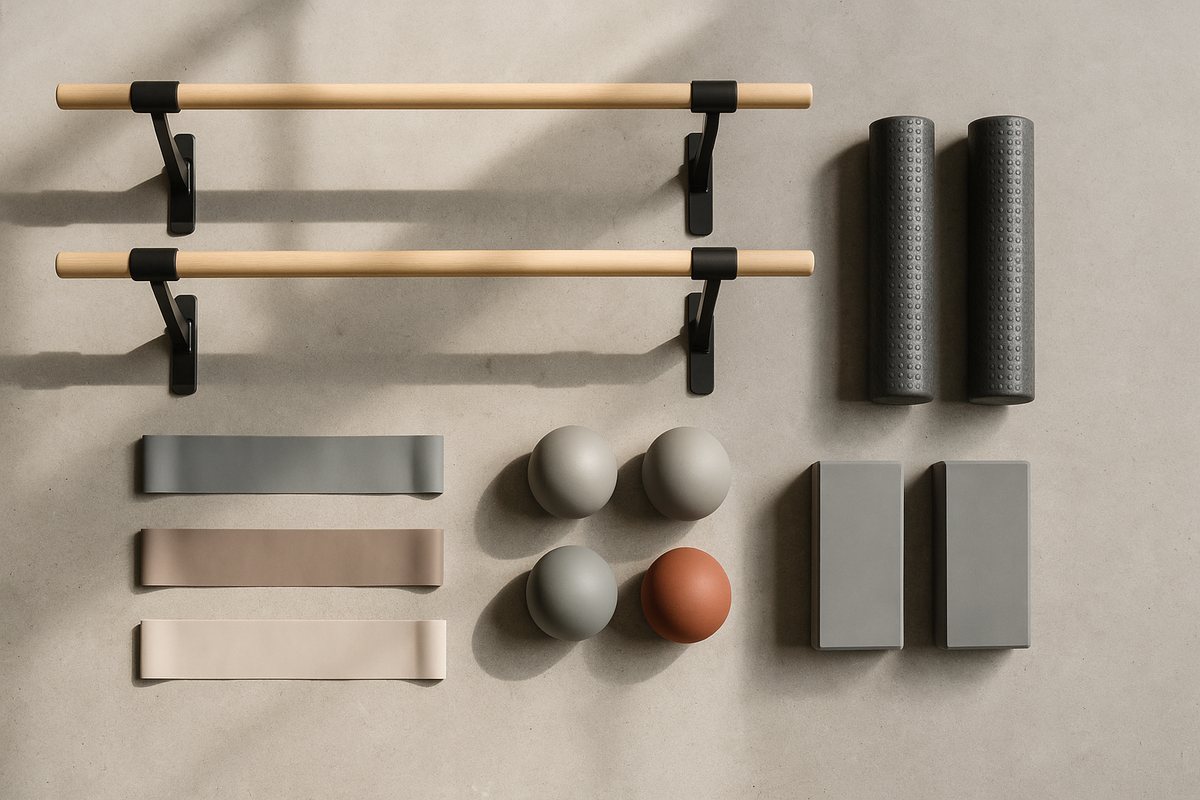
- Core prop stack: Modern barre classes still rely on the original 50-year-old foundation of mat, barre, light weights (2–8 lbs), and small Pilates ball, now augmented by resistance bands, gliding discs, and grip socks to add variety and intensity without requiring major capital outlays.
- Commercial barre suppliers: Vita, the largest U.S. manufacturer of ballet barres and fitness equipment, partners with brands like Pure Barre and Beachbody for custom color, logo, and co-developed products, while Custom Barres serves elite studios, universities, and rehabilitation facilities with premium-grade installations.
- Home equipment price points: Entry-level home setups start at $10 for an inflatable ball and use a sturdy chair or countertop as the barre; mid-tier portable barres like the Booty Kicker or Fluidity Barre System range from $300 to $600, and complete prop kits retail between $75 and $105 including bands, sliders, ball, and optional weights.
- Props-driven programming: Instructors now design classes around equipment availability, incorporating props to deliver consistent routines whether working with one barre, multiple barres, or none at all, with formats like Barre Above providing 500+ choreographed videos and 1,200+ pre-counted songs to support instructors.
- Sustainability gap: While yoga brands like Manduka offer biodegradable, zero-waste mats, barre-specific eco-prop innovation remains limited in 2026, presenting an opportunity for manufacturers and studio buyers prioritizing sustainable materials.
Why Barre Equipment Decisions Matter More in 2026
The barre equipment market is no longer a niche corner of boutique fitness. According to market research published by DataIntelo, the global barre equipment sector reached USD 1.42 billion in 2024 and is forecast to expand at a compound annual growth rate of 6.8% through 2033, when it will hit USD 2.77 billion. This growth reflects two converging trends: boutique studios upgrading to commercial-grade, aesthetically cohesive equipment, and sustained home-practitioner demand sparked by the COVID-19 pandemic.
For studio operators, the stakes are higher than picking a barre color. Equipment choices now influence class design flexibility, instructor recruitment, brand differentiation, and long-term capital allocation. Per a recent Barre Series industry analysis, the shift away from siloed training methods means Pilates, barre, and functional strength are collaborating rather than competing, pushing instructors to adapt setups and incorporate props to deliver dynamic routines across modalities.
The 50-Year-Old Core Stack and Its Modern Additions
Barre was created more than five decades ago using a mat, ballet barre, light hand weights, and a small Pilates ball. According to Barre Series, the basics of the original method still form the main foundation today, though the format has evolved by finding creative ways to use existing equipment and adding new pieces into routines. Modern classes now incorporate resistance bands and gliding discs alongside the traditional props.
This evolution is strategic, not cosmetic. Props like Pilates balls, sliders, weights, and bands add variety to routines and amplify workout benefits without requiring studios to invest in costly machines. For home practitioners, the barrier to entry remains low: a sturdy chair or kitchen counter that does not slide on the floor can substitute for a barre, a yoga mat provides cushioning, and a small inflatable ball costs about ten dollars, per Barre Series. Barre3 recommends handheld weights between 2–8 lbs and one of their Core Balls as a starter stack.
Bundled Prop Kits and Pricing Tiers
Retail prop kits offer convenience for home users and traveling instructors. The barre3 Signature Prop Kit (Extended Bands) retails at $75 and includes two Core Sliders, one Core Ball, one tote bag, and a set of circle bands in light, medium, and heavy resistance. The barre3 Signature Prop Kit + Weights adds a set of 5 lb weights for $105. Individual instructor equipment, including a portable ballet barre, typically costs $100 to $300, depending on features and brand.
Commercial Barre Manufacturers and Custom Partnerships
Vita is the largest U.S. manufacturer of ballet barres and fitness equipment. According to Vita's commercial sales division, its barres have become the product of choice for major brands seeking quality and scalability, backed by a responsive in-house support team. Vita partners with brands like Beachbody and Pure Barre for custom color and logo combinations, co-development of unique products, and wholesale relationships, enabling franchises to maintain brand consistency across hundreds of locations.
Custom Barres positions itself at the premium end, setting what it describes as the global standard for professional ballet barres designed for elite studios, rehabilitation facilities, universities, hospitality brands, and luxury homes. The company emphasizes strength, quality, and longevity, outperforming competitors in durability for high-traffic commercial environments.
Both manufacturers reflect the market's bifurcation: Vita serves franchise brands prioritizing customization and speed to market, while Custom Barres targets high-end independent studios and institutional buyers willing to pay more for heirloom-quality installations.
Portable Barres for Hybrid and Home Instruction
The Fluidity Barre System comes fully assembled with a ball, pump, workout DVD, and two bands. Per Barre Series, it requires only height adjustment and locking into place, collapses with wheels for storage, and costs just under $600 plus tax. The Booty Kicker is described as perhaps the most portable ballet barre, folding flat for storage with built-in racks for weights so instructors can modify intensity without scattering equipment across the floor.
Other top-rated at-home options include the Stroops Dorbarre and Artan Balance Ballet Barre. These portable systems appeal to instructors teaching private sessions in client homes, hybrid studio-plus-home practitioners, and renters who cannot install wall-mounted barres.
Grip Socks and Emerging Accessory Categories
Grip socks have matured from a novelty to a functional necessity. According to Barre Series, brands like Souls, designed in New York City by sisters Caroline and Lizzy Tierney, are bringing style to standard barre and Pilates accessories. Barre grippy socks provide extra grip and stability during workouts, essential for maintaining proper form and balance, with non-slip grips on the soles preventing slips on studio floors or at home.
While socks are low-margin retail items, they offer studios a recurring revenue stream, brand touchpoint, and member safety benefit. Studios increasingly bundle grip socks into new-member welcome kits or sell them at the front desk.
Sustainability in Barre Props: The Gap and the Opportunity
Top barre equipment makers select durable and sustainable materials, per Barre Series, ensuring barres withstand rigorous use and maintain appearance over time. However, yoga-focused sustainability brands like Manduka, with eKo mats made from sustainably sourced rubber from rubber trees and manufactured emissions-free in a zero-waste process, dominate the eco-friendly fitness equipment conversation. Barre-specific eco-prop innovation remains limited in current market data as of May 2026.
This gap presents an opportunity for manufacturers and studio buyers. As members increasingly ask about environmental practices, studios that can point to biodegradable balls, recycled-rubber bands, or FSC-certified wood barres may gain a competitive edge, particularly in coastal and college-town markets where sustainability values run high.
How Teaching Platforms Integrate Equipment into Programming
Equipment decisions intersect with instructor training and class choreography. Barre Above's FPP certification program provides lifetime access to certification materials with four new choreography releases each month, full access to 500+ done-for-you class videos and choreography notes, 1,200+ pre-counted, fully choreographed songs in the Musicality Method database, and rights to use Barre Above and Barre Above Pilates names, logos, and programming.
This model demonstrates how prop-driven programming and instructor resources co-evolve. Studios that invest in a consistent prop stack (bands, balls, sliders, weights) can plug into content libraries designed around those tools, reducing instructor prep time and ensuring class consistency across locations and substitute teachers.
What This Means for Studio Owners
Editorial analysis — not reported fact:
If your studio is evaluating equipment purchases in 2026, prioritize interoperability and instructor flexibility. A prop stack that supports barre, Pilates, and functional strength classes lets you offer more formats without buying redundant equipment. Studios opening in the next 12 months should negotiate bulk pricing and custom branding with manufacturers like Vita early in the buildout process, particularly if you plan to franchise or open additional locations.
For independent studio owners, portable barres and modular setups offer capital efficiency. If your lease is short-term or your schedule includes off-site corporate classes, investing in collapsible barres like the Booty Kicker and transport-friendly prop kits makes financial sense. Track member interest in sustainability: if clients ask about eco-friendly products, source biodegradable balls and recycled bands now before competitors do.
Home instructors and hybrid models face different trade-offs. A $600 portable barre and $105 prop kit deliver professional credibility in client homes, but the investment only pencils if you teach at least four private sessions per month at premium rates. If most of your income comes from studio employment, a chair and a $75 kit may suffice.
Sources & Further Reading
- DataIntelo Global Barre Equipment Market Report — market sizing, growth forecasts, and segment analysis through 2033
- Barre Series: 2026 Pilates and Barre Industry Trends — prop innovations, teaching strategies, and equipment recommendations
- Vita Barre — largest U.S. commercial barre manufacturer, product catalog, and custom partnership options
- Vita Commercial Sales Division — case studies of franchise partnerships with Pure Barre and Beachbody
- Custom Barres — premium ballet barres for elite studios, universities, and luxury residential installations
Editorial coverage of publicly reported industry developments. Barre Diary has no commercial relationship with any companies named.