Barre for Elite Athletes: The Untapped Studio Revenue Stream
NFL players use ballet for performance gains, but studios aren't marketing to sports teams. How to capture the athlete cross-training and injury rehab market.
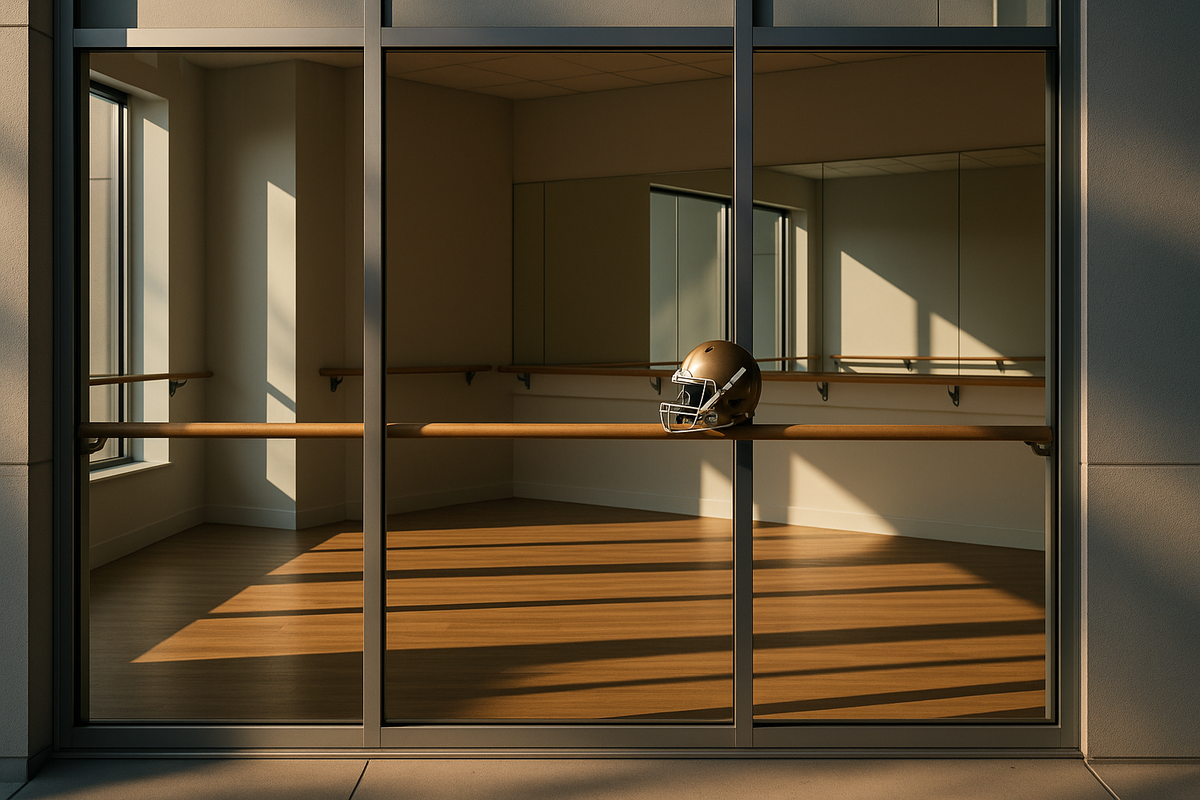
Key Takeaways
- NFL players including Lynn Swann and Steve McLendon have publicly credited ballet and barre training for improving on-field performance, with the Dallas Cowboys installing ballet barres outside their locker room in 2014.
- Philadelphia Eagles linebacker Nakobe Dean used contemporary ballet at BalletX in 2024 to rehabilitate from a torn patellar tendon, gaining flexibility and mobility during recovery.
- Athletes typically show muscular imbalances with strong quadriceps and hamstrings but weak hips, adductors, abductors, ankles, and feet—exactly the areas barre targets through isometric holds and eccentric loading.
- Eight-week barre training significantly increased lower limb and core muscle endurance and strength in sedentary office workers compared to control groups, according to peer-reviewed research published in 2023.
- Studios have not yet marketed barre to competitive sports teams, college athletic departments, or sports medicine clinics, leaving a white-space revenue opportunity in the performance and recovery market.
- Barre's three historical strands include a sports-focused lineage via Lydia Bach, positioning the modality as inherently athlete-ready rather than requiring format adaptation.
Why Professional Athletes Are Turning to Barre and Ballet
From the NFL to elite cycling, professional athletes are integrating barre and ballet-based training into performance and recovery programs. American football legend Lynn Swann, known as "the Baryshnikov of football," credits his on-field grace to ballet training he began at age eight. More recently, Philadelphia Eagles linebacker Nakobe Dean used contemporary ballet classes at BalletX to rehabilitate from a torn patellar tendon in 2024, reporting significantly improved flexibility and reduced post-workout soreness.
The Dallas Cowboys formalized this approach in 2014 by installing ballet barres outside the locker room for stretching and stability work. Tampa Bay Buccaneers player Steve McLendon told reporters that ballet is "harder than anything else I do," emphasizing the physical demands of barre-based training. These high-profile adoptions signal a shift from niche cross-training to mainstream athletic programming.
What Barre Addresses That Traditional Strength Training Misses
Most competitive athletes develop pronounced muscular imbalances through sport-specific training. According to IDEA Health & Fitness Association, athletes typically have very strong quadriceps, hamstrings, and upper bodies but lack strength and flexibility in hips, adductors, abductors, ankles, and feet—the exact regions barre targets through isometric holds, small-range pulsing, and eccentric loading.
These imbalances contribute directly to injury risk. Dance and barre classes help athletes develop strong, flexible muscles and strengthen weak sides, creating balance in the body that aids injury prevention and increases athletic conditioning, per Next College Student Athlete. Professional athletes use barre specifically to increase hamstring flexibility, strengthen calves, work feet and ankles, improve balance, and gain control through proper arm, foot, and leg placement.
Core Stability and Sport-Specific Translation
Barre builds strength, coordination, agility, and balance that translates well to tennis, pickleball, running, and cycling, according to Sports West Athletic Club. Professional athletes also take barre classes to improve core strength and stability, two factors critical to power transfer and injury resilience. Unlike traditional weightlifting that emphasizes concentric muscle contraction, barre targets the core, glutes, thighs, and arms through movements that often work muscles to the point of shaking, while emphasizing posture and flexibility through integrated stretching.
Peer-Reviewed Evidence on Barre for Athletic Performance
The research base for barre as athletic training remains limited but growing. ACE Fitness notes that little published research has focused on the effectiveness of barre exercise, and research on the benefits of a specific barre format have not been published in a peer-reviewed journal as of 2019. However, a 2023 study comparing barre and dance fitness in 35 women ages 21 to 35 found the barre fitness group showed significant improvements in physical fitness, including reduced waist and hip measurements and better heart and lung function.
More directly relevant to athletic populations, an eight-week barre exercise training program significantly increased lower limb and core muscle endurance and strength compared to a control group in sedentary female office workers. While these studies focus on general fitness populations rather than competitive athletes, they establish barre's efficacy in addressing the precise muscular weaknesses athletes exhibit.
The Injury Prevention Debate
There is no scientifically based prescription for flexibility training, and no conclusive statements can be made about the relationship of flexibility to athletic injury, according to IDEA. However, a comprehensive meta-analysis indicates that strength training aimed at improving athletes' eccentric strength, core stability, and muscular balance can substantially reduce the risk of sports-related injuries. Barre's specific role in eccentric strength development remains under-studied, representing both a research gap and a positioning opportunity for studios able to track client outcomes.
Why Studios Are Missing the Athlete Revenue Stream
Despite barre's demonstrated appeal to professional athletes, most studios have not marketed to competitive sports teams, college athletic departments, sports medicine clinics, or CrossFit facilities. The global barre studio market reached USD 1.42 billion in 2024, with growth driven primarily by general fitness consumers and dance school collaborations. Studios often collaborate with dance schools and academies to offer specialized classes and workshops, but analogous partnerships with sports teams or physical therapy clinics remain rare.
This represents white-space opportunity. Barre programs can include anything from specific balletic movements taught only by former professional dancers to "hot barre" to programs that offer functional cross-training for athletes and people of all ages and abilities—yet athlete-specific programming remains largely undeveloped. The modality's historical roots support this expansion: barre traces back to three strands including a sports-focused lineage via Lydia Bach, positioning it as inherently athlete-ready rather than requiring wholesale format changes.
Target Athlete Niches and Programming Angles
Different sports present distinct muscular imbalances and injury patterns that barre can address through targeted programming:
- Runners and distance athletes: Chronic ankle instability, weak hip abductors, and limited ankle mobility respond well to barre's focused work on feet, ankles, and lateral hip stability.
- Football players: Agility, joint stability, and bilateral strength balance are precisely what players like Nakobe Dean and Steve McLendon sought from ballet and barre training.
- Swimmers: Shoulder mobility and scapular stability become training priorities that barre's upper-body sequences and postural emphasis can support.
- Tennis and racquet sports athletes: Footwork precision, lateral stability, and explosive push-off power all improve through barre's emphasis on ankle and foot strength under controlled conditions.
- Cyclists: Hip flexor tightness, weak glute medius muscles, and limited ankle dorsiflexion create the muscular imbalances barre specifically targets.
How to Position Barre as Injury Prevention and Return-to-Sport
Studios can capture athlete revenue through three positioning strategies: prevention, active recovery, and rehabilitation. Prevention programming markets to teams and clubs during off-season or pre-season training blocks, emphasizing muscular balance and joint stability. Active recovery sessions offer low-impact, high-control movement for in-season athletes managing training loads.
Rehabilitation positioning requires collaboration with sports medicine providers. Barre is now gaining traction in physical therapy, senior wellness, and corporate wellness programs, establishing precedent for clinical partnerships. Studios can offer return-to-sport programming for athletes cleared for weight-bearing exercise but not yet ready for full training loads, as demonstrated by Nakobe Dean's use of ballet during patellar tendon recovery.
What This Means for Studio Owners
Editorial analysis—not reported fact:
The athlete market represents a fundamentally different revenue model than drop-in fitness consumers. Sports teams contract for seasonal programming blocks, college athletic departments budget annually for performance services, and sports medicine clinics refer patients for specific rehabilitation protocols. These relationships require studios to develop B2B sales capacity, outcome tracking systems, and instructor training in sport-specific programming—capabilities most studios have not yet built.
The initial investment creates barriers to entry that also protect first movers. A studio that secures a contract with a local college soccer team or establishes referral relationships with three sports medicine physicians builds competitive moats through demonstrated outcomes and institutional relationships. Instructors with playing backgrounds or certifications in corrective exercise become differentiating assets rather than interchangeable labor.
Start narrow rather than broad. Identify one sport with strong local participation (high school cross-country teams, adult recreational soccer leagues, cycling clubs) and develop a single pilot program with tracked outcomes. Document improvements in single-leg stability tests, ankle dorsiflexion range of motion, or injury rates compared to prior seasons. Use those results to approach the next team or clinic. The athlete market rewards specialization and evidence more than the general fitness market does—which aligns well with studios able to demonstrate specific expertise.
Sources & Further Reading
- IDEA Health & Fitness Association on improving athletic performance with barre-based ballet-inspired training—covers muscular imbalances athletes face and how barre addresses them
- Next College Student Athlete on dance classes for athletes—profiles Lynn Swann, Dallas Cowboys ballet barres, and injury prevention benefits
- NFL.com report on Eagles linebacker Nakobe Dean using ballet for injury rehabilitation—describes his 2024 recovery from torn patellar tendon at BalletX
- Sports West Athletic Club on barre classes myths debunked—explains sport-specific translation to tennis, pickleball, running, and cycling
- ACE Fitness on understanding the barre group fitness trend—notes research gaps in peer-reviewed barre literature
- Healthline explainer on what barre workouts are—describes muscle targeting and emphasis on posture and flexibility
- 2023 peer-reviewed study comparing barre and dance fitness—shows significant improvements in physical fitness measures and 8-week strength gains
- Growth Market Reports on the global barre studio market—provides 2024 market size and collaboration patterns with dance schools
- Meta-analysis on strength training and sports injury prevention—establishes evidence for eccentric strength, core stability, and muscular balance in reducing injury risk
- Wikipedia overview of barre exercise—traces historical strands including Lydia Bach's sports-focused lineage and describes current programming diversity
Editorial coverage of publicly reported industry developments. Barre Diary has no commercial relationship with any companies named.