Barre + Strength Training Fusion: What's Actually Happening
Pure Barre Define, Empower, and Reform bring dumbbells and functional movements to classic barre. Here's why major brands are doubling down and what it means for studios.
Key Takeaways
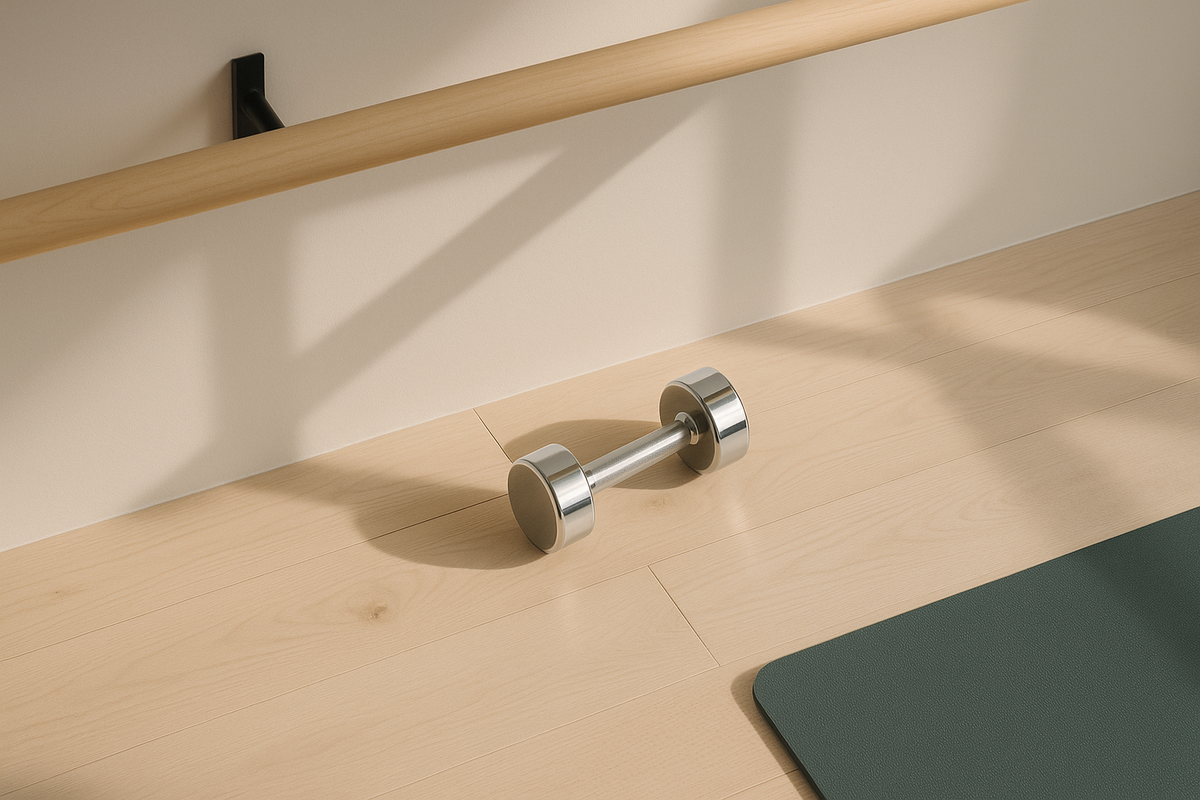
- Pure Barre Define and Empower formats now integrate dumbbells (up to 15 pounds), functional movements, and HIIT alongside classic barre technique, representing a strategic shift by the largest US barre brand toward strength-focused programming.
- Instructor certification programs from Barre Fusions, Barre Above, Barre Intensity, and Balanced Body now emphasize functional movement and seamless fusion design, signaling industry-wide professionalization of hybrid formats rather than niche experimentation.
- Equipment investment remains minimal for studios adding fusion formats: small dumbbells (1-15 pounds), resistance bands, and exercise balls cost substantially less than cardio or cable machines, making the business case accessible even for boutique operators.
- Consumer demand drivers include requests for workouts that build measurable strength while preserving barre's focus on control, balance, and body connection, not just aesthetic outcomes.
- Physiological rationale combines barre's signature isometric holds (static muscle contraction at fixed joint angles) with traditional resistance training's full range-of-motion work, addressing both muscular endurance and functional strength in a single session.
- No visible instructor pushback appears in public forums or trade coverage as of mid-2026, suggesting either broad adoption consensus or that debate remains confined to private professional communities.
Why Major Barre Brands Are Doubling Down on Strength Integration
In May 2026, Pure Barre announced the reintroduction of Pure Barre Reform, a Pilates-inspired format designed to build strength and improve stability. This follows the brand's 2023 launch of Pure Barre Define, which fuses classic barre technique with dumbbell-based functional movements over 50 minutes. Pure Barre Empower adds high-intensity interval training using ankle weights and a plyometric platform to the mix, per the brand's current class format roster.
These aren't pilot experiments. Pure Barre's seventh annual Barre Stronger Challenge saw 28,615 participants in 2025, with the program explicitly encouraging members to rotate through Classic, Define, Align, and Empower formats. The scale of participation signals that fusion formats have moved from specialty offering to core studio revenue strategy for the largest barre brand by studio count in the United States.
Other operators have followed parallel paths. Lake Austin Spa Resort offers TRX Barre Fusion, combining suspension training with barre fundamentals. Florida-based Breaking Barre runs Barre Strength classes featuring heavier weights combined with traditional props. A Philadelphia studio launched Aerial Barre in April 2026, blending ballet, aerial yoga, and Pilates using a barre and hammock for moderate to high strength-building work.
How Weight Loads and Equipment Are Actually Being Used
Weight specifications vary by brand and format intensity. The Bar Method incorporates dumbbells of 1 to 12 pounds to sculpt triceps, biceps, and shoulders, updated as of May 2026. Most traditional barre exercises use lighter weights with no more than 5 pounds of resistance, while standalone standing barre and strength fusion workouts recommend 2 to 15 pound dumbbells depending on participant fitness level.
The equipment ecosystem remains deliberately low-capital. Studios typically provide yoga mats, 5-pound weights, exercise balls, and resistance bands as standard props. Pilates-barre fusion classes add resistance loop bands and light dumbbells. This contrasts sharply with the investment required for boutique cycling, rowing, or functional fitness studios, where equipment costs can exceed $50,000 for initial buildout. For barre operators, adding fusion programming requires only incremental spend on dumbbells and bands atop existing flooring, mirrors, and sound systems.
What the Certification and Training Market Reveals About Demand
Instructor education has shifted to accommodate fusion programming at scale. Barre Fusions offers a nationally accredited continuing education course for fitness professionals who want to blend barre, yoga, strength, Pilates, and functional fitness into seamless movement experiences. Barre Above teaches a repeatable functional movement framework for designing 30-, 45-, 55-, or 60-minute fusion classes. Barre Intensity training positions barre's combination of Pilates, dance, yoga, and functional training as highly effective for cardiovascular health and muscle development, emphasizing techniques that induce muscle fatigue and elevate heart rate.
The proliferation of these certifications from independent providers, not just franchise systems, indicates that demand for fusion training extends beyond brand-specific continuing ed. Studios operating under independent or white-label models are seeking credentialing that supports hybrid class design, functional movement vocabulary, and progressive loading strategies.
The Physiological and Consumer Psychology Behind the Shift
Traditional resistance training moves joints through full range of motion under load. Barre's signature approach uses tiny isometric contractions with no change to joint angle, creating static muscle contraction that builds muscular endurance. Fusion formats attempt to combine both: isometric holds for time under tension, interspersed with concentric and eccentric phases using dumbbells or resistance bands.
Consumer preference research cited by multiple providers highlights a shift in motivation. Participants increasingly seek workouts that build measurable strength, improve balance and joint flexibility, support bone density, and contribute to longevity and functional movement in daily life. Standing barre workouts that combine strength training and barre technique have been specifically requested by studio members, according to instructor feedback compiled by training organizations. The aesthetic messaging of early barre marketing (long, lean muscles; sculpted arms) is giving way to functional outcomes: lifting groceries, playing with children, maintaining independence as clients age.
Marketing claims that participants can observe changes in how their bodies feel, move, and look in as few as two weeks persist across brands, though such timelines remain anecdotal rather than peer-reviewed.
What This Means for Studio Owners
Editorial analysis — not reported fact:
If you operate a barre studio and have not yet added a fusion or strength-integrated format to your schedule, you are working against demonstrated consumer demand and competitive pressure from the category's largest player. The business case is unusually accessible: equipment costs are low, instructor training is widely available through accredited CE providers, and class formats can be slotted into existing schedules without requiring dedicated studio space or new liability considerations.
The absence of visible instructor resistance or public debate about format purity is notable. This may mean the profession has reached consensus that evolution is necessary, or it may mean dissent exists in private instructor forums, Facebook groups, or staff meetings where it is not indexed by search engines. Either way, studio owners should actively solicit honest feedback from teaching staff about their comfort level with strength programming, familiarity with progressive overload principles, and ability to cue compound movements safely. A rushed rollout using instructors who lack confidence in strength coaching will produce poor client outcomes and potential injury risk.
Consider piloting a single weekly fusion class with your most experienced instructors before committing to a full format rebrand. Track attendance, client feedback, and instructor sentiment over eight to twelve weeks. If uptake is strong, invest in continuing education for your full teaching team and expand gradually. If adoption is tepid, examine whether the issue is format design, instructor delivery, marketing clarity, or a mismatch between your specific client base and the broader trend.
Sources & Further Reading
- Pure Barre announces reintroduction of Pure Barre Reform — May 2026 press release detailing Pilates-inspired strength and stability format
- Pure Barre Define launch announcement — July 2023 introduction of dumbbell-based fusion format
- Pure Barre class formats — current offerings including Classic, Define, Empower, Align, and Reform
- The Bar Method on barre strength training with weights — May 2026 blog post detailing 1-12 pound dumbbell integration
- Barre Above certification and functional movement framework — instructor training for fusion class design
- Barre Intensity Instructor Training — ACE-accredited course on combining Pilates, dance, yoga, and functional training
- Barre Fusions Art of Fusing Formats course — nationally accredited CE for blending barre, yoga, strength, Pilates, and functional fitness
Editorial coverage of publicly reported industry developments. Barre Diary has no commercial relationship with any companies named.