Franchise vs. Independent Barre Studios: Profitability Gap
Owner-operated independent barre studios achieve 54% profit margins versus 22% for franchises. Investment, fees, and 2026 market data reveal the trade-offs.
Key Takeaways
- Investment gap: Franchise barre studios require $300,000 to $650,000 in upfront capital, while independent studios can launch for as little as $40,000 to $55,000, making bootstrapped ownership accessible to more instructors.
- Profit margin difference: Owner-operated independent barre studios achieve profit margins around 54%, compared to approximately 22% for the average franchise studio after paying 8-9% ongoing fees on gross revenue.
- Revenue variability: Top-quartile Pure Barre franchises averaged $588,040 in annual revenue versus $192,833 for bottom-quartile locations in 2024, a threefold gap that exposes individual franchisees to significant market risk.
- Market headwinds in 2026: Xponential Fitness reported same-store sales declining 6% in Q1 2026 after 6% growth the prior year, and average unit volume dropped 3% year-over-year to $662,000, signaling saturation or increased competition.
- Growth trajectories diverge: Pure Barre added only 2 net new studios in 2024 (down from 13 in 2022), while barre3 expanded by 25 locations in 2024 and earned Entrepreneur's #1 barre franchise ranking for 2026.
- Control trade-off: Franchises provide proven systems, national brand recognition, and structured training, but independent owners retain 100% of decision-making authority over programming, pricing, and local marketing strategy.
Why Profitability Per Dollar Favors Independence
The financial case for independent barre studio ownership hinges on a straightforward arithmetic advantage. An owner-operated independent studio can achieve a 54% profit margin, retaining more than twice the percentage of every revenue dollar compared to the 22% margin typical of Pure Barre franchises. For context, Pure Barre studios averaged $368,588 in gross revenue during 2024 according to the brand's 2025 Franchise Disclosure Document, translating to roughly $82,000 in owner income at that 22% margin after paying 7% royalties and 2% brand development fees.
Independent owners teaching their own classes can expect take-home pay of $60,000 to $70,000 annually from a lean operation, according to Studio Growth analysis of independent barre financials. While a successful absentee franchise owner at a top-performing location might exceed $170,000 per year, that outcome depends on landing in the top revenue quartile and hiring competitive instructors. Many franchisees who finance their six-figure investments report years of minimal or negative returns, particularly in the bottom half of the performance distribution.
The $300,000 Capital Barrier vs. $50,000 Bootstrapping
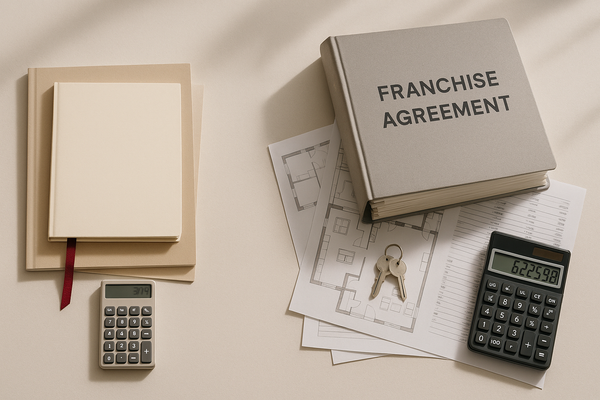
Franchise barre studios require total investments ranging from $300,000 to $650,000, a threshold that typically necessitates Small Business Administration loans or personal guarantees. Pure Barre's initial franchise fee alone stands at approximately $50,000, before construction, equipment, or working capital. In contrast, budget-conscious independents have launched studios for $40,000 to $55,000, often by securing affordable commercial space, purchasing used equipment, and bootstrapping marketing through instructor networks and local social channels.
One independent owner shared on Reddit that she opened her first studio in 2012 with just $45,000, turned profitable within two years, and now operates three locations, as detailed in a Studio Growth franchise comparison report. Another instructor explained she avoided Pure Barre franchising because it was "too expensive" and "too controlling," opting instead to self-fund a studio at a fraction of the cost while retaining full programming autonomy.
Ongoing Fees Compound Over Time
Franchise royalties and marketing fees compound into significant long-term cost. Pure Barre charges a combined 9% of gross revenue (7% royalty, 2% brand development), which equals more than $33,000 annually for an average-performing studio grossing $368,588. The brand also imposes a technology fee starting at $304 per month with a 50% annual increase cap, potentially escalating to $456 monthly in year two and $684 by year three, per the 2025 Pure Barre FDD reviewed by Studio Growth.
Barre3 studios averaged $413,794 in annual revenue in 2024, the highest among major franchises, and charge 8% ongoing fees (6% royalty, 2% marketing), slightly lower than Pure Barre. The Bar Method's initial investment starts at $304,000, but Studio Growth notes the unit economics often don't pencil for average owners. Independent studios pay zero royalties, redirecting that 8-9% margin directly to owner equity or reinvestment in staff and amenities.
Revenue Volatility and Market Saturation Signals
Franchise performance varies dramatically by location and operator capability. The top quartile of Pure Barre studios generated $588,040 in average annual revenue, while the bottom quartile brought in only $192,833, a threefold spread. Profit disparity is even steeper: top-quartile franchises earn more than five times the absolute dollar profit of bottom-quartile peers, amplifying the stakes of site selection and local competition.
Broader market indicators suggest challenges for the franchise model in 2026. Xponential Fitness reported North American average unit volume declining to $662,000 in Q1 2026 from $685,000 in Q1 2025, a 3% year-over-year drop. More concerning, same-store sales turned negative at -6% in Q1 2026 compared to positive 6% growth the prior year, a swing that points to market saturation or intensifying competition from boutique independents and digital-hybrid formats. Pure Barre's own expansion stalled, adding only 2 net new studios in 2024 versus 13 in 2022.
Franchise System Support vs. Entrepreneurial Autonomy
Franchises deliver structured advantages that appeal to first-time owners. Investing in a franchise means stepping into a proven business model with comprehensive initial training, ongoing operational assistance, and national marketing infrastructure, accelerating time to profitability relative to building systems from scratch. Established brands also confer instant local credibility and streamline vendor negotiations for equipment, insurance, and point-of-sale technology.
Yet control-oriented instructors chafe under franchise constraints. Corporate dictates on class formats, music licensing, instructor certification pathways, and promotional calendars limit responsiveness to hyperlocal demand. Independent owners can pivot immediately to add prenatal barre, partner with physical therapists for clinical referrals, or test premium small-group pricing without awaiting franchisor approval. This agility proved decisive during COVID-19 studio reopenings, when independents could tailor capacity and ventilation to neighborhood risk tolerance faster than franchisees awaiting corporate guidance.
Competitive Landscape Shifts in 2026
Franchise brand health varies significantly entering the second quarter of 2026. Barre3 earned the #1 barre franchise ranking from Entrepreneur in 2026 and placed in the top 10% of all U.S. franchises, while expanding by 25 locations in 2024 in part through acquiring The Barre Code franchise system. Pure Barre's parent, Xponential Fitness, faces franchisee profitability pressure and agreed to pay $17 million over 12 months to resolve an FTC investigation into compliance with unfair or deceptive acts, raising governance questions for prospective franchisees.
Alternative models also emerge as middle paths. Programs such as Barre Forte's licensing structure allow instructors to bring a proven format into existing gyms, wellness centers, or shared studio spaces without the capital or complexity of full franchising, per Studio Growth's franchise comparison analysis. These hybrid approaches appeal to instructors seeking curriculum credibility without sacrificing ownership economics.
What This Means for Studio Owners
Editorial analysis — not reported fact:
If you are an experienced instructor with a loyal local following and access to $50,000 in startup capital, the independent path offers materially higher profit margins and operational freedom, provided you are prepared to self-educate on liability insurance, payroll compliance, and digital marketing. The 54% margin advantage compounds over years, funding competitive instructor wages and facility reinvestment that franchisees struggle to afford after royalty obligations.
Conversely, if you lack teaching experience, have limited time for curriculum development, and prioritize risk mitigation through proven systems, a franchise remains viable—but choose the brand carefully. Barre3's revenue performance and Entrepreneur recognition suggest stronger unit economics and franchisor support than competitors experiencing declining same-store sales. Scrutinize Item 19 financial disclosures in the FDD, and speak with at least five franchisees in the bottom and middle revenue quartiles, not just top performers curated by development sales teams.
For those already operating a franchise and contemplating renewal or exit, model your next five years under three scenarios: status quo with current fee structure and tech cost escalations; renegotiation of territory exclusivity if corporate opens competing locations nearby; and conversion to independent operation post-term. The gap between 22% and 54% margins funds a significant amount of rebranding, website development, and local SEO investment to recapture name recognition after leaving a franchise system.
Sources & Further Reading
- Studio Growth: Are Barre Studios Profitable? — Detailed financial analysis of Pure Barre FDD 2025 data, independent studio margins, and Xponential Fitness Q1 2026 earnings
- Studio Growth: Which Is the Best Barre Fitness Franchise to Open? — Comparative review of Pure Barre, barre3, and The Bar Method investment requirements, ongoing fees, revenue performance, and franchisee testimonials from Reddit discussions
Editorial coverage of publicly reported industry developments. Barre Diary has no commercial relationship with any companies named.