Getting Started with Barre: First-Class Essentials
What beginners should expect in their first class, common mistakes to avoid, how to choose between Pure Barre, Barre3, and Xtend formats, and minimal equipment needed for home practice.
Key Takeaways
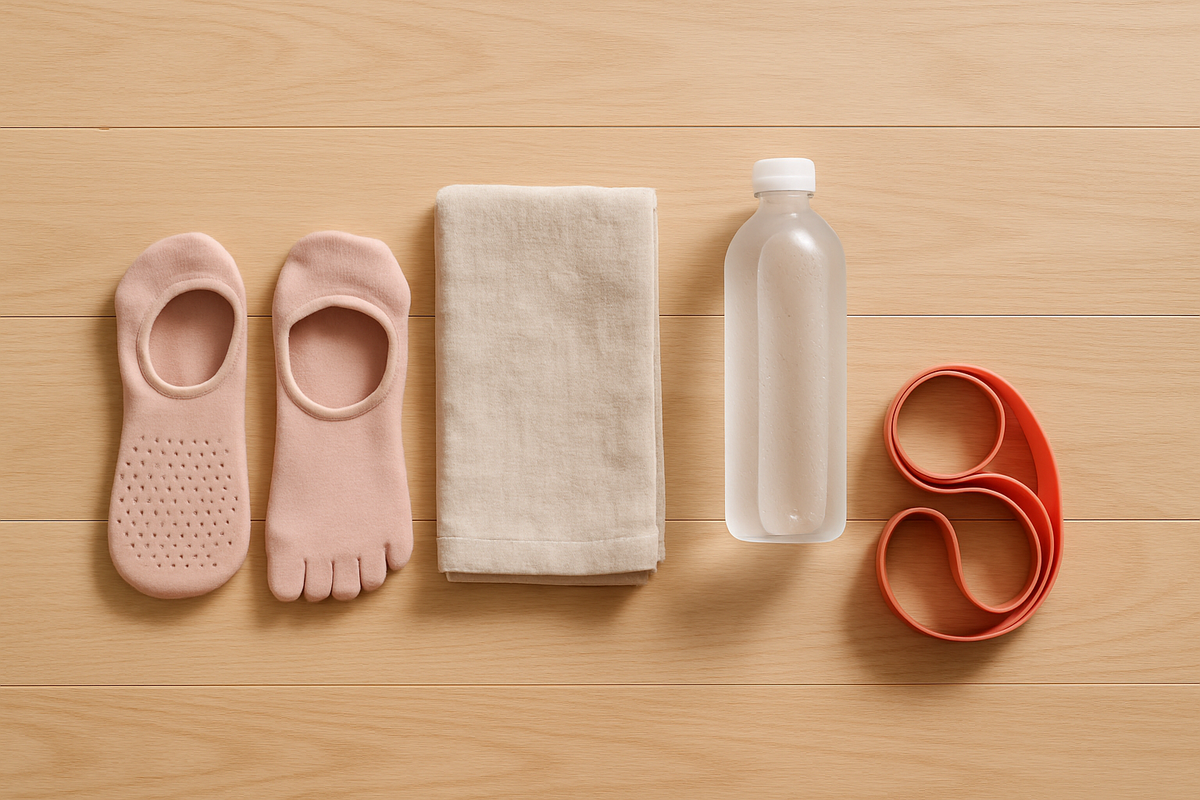
- First-class essentials: Arrive 10-15 minutes early, wear fitted or breathable clothing, and bring grippy socks, water, and a small towel. All equipment (weights, bands, balls) is provided in-studio.
- Beginner frequency: Studios recommend starting with 2-3 classes per week, with visible results appearing within 8-10 classes when practiced three or more times weekly.
- Format selection matters: Pure Barre emphasizes the "tuck" and cardio elements; Barre3 offers low-impact, yoga-inspired movements ideal for beginners and injury recovery; Xtend Barre incorporates ballet terminology and optional cardio bursts.
- Common mistakes to avoid: Gripping the barre too tightly (use a "karate chop" grip), making large movements instead of small controlled pulses, and not listening carefully to fast-paced instructor cues.
- Home practice is highly accessible: Barre requires minimal space and equipment—a stable chair, exercise mat, and optional 1-3 pound dumbbells create an effective home setup.
- Class structure is consistent: Expect 45-60 minutes following a warm-up, small controlled movements targeting legs and glutes, mat work for core, and stretching cool-down.
What to Expect in Your First Barre Class
A typical barre class runs 45 to 60 minutes and follows a predictable sequence: warm-up, strength-building movements targeting legs, thighs, glutes, and arms, mat work for core engagement, and a stretching cool-down. The hallmark of barre is small, controlled movements that bring muscles to fatigue rather than large, sweeping gestures.
First-timers should arrive 10-15 minutes before class starts to meet the instructor, get oriented to the studio space, and settle in without rushing. Instructors emphasize that beginners should never compare themselves to longtime students who may have been practicing for years. The workout's signature "shake" in your muscles signals you're working at the right intensity, not that something is wrong.
Three Mistakes Every Beginner Should Avoid
Instructors across major formats identify three common pitfalls that undermine a beginner's first experience. First, gripping the barre too tightly creates unnecessary shoulder tension; instructors recommend a relaxed "karate chop" grip instead. Second, new students often assume bigger movements yield better results, when in fact the tiny, controlled pulses are what bring muscles to fatigue most effectively. Third, not listening carefully to instructor cues becomes problematic because barre classes move at a fast pace with continuous form adjustments.
How Often Should Beginners Practice Barre?
Studios recommend starting with 2 to 3 workouts per week until strength and endurance build. Results become visible within 8-10 classes, and for optimal outcomes, instructors suggest attending three or more times per week. Physical changes appear in just a few weeks, though the inward transformation—improved body awareness, balance, and confidence—starts immediately.
For home practitioners, aiming for three to four sessions weekly provides a solid starting point that allows the body to adapt without overwhelming muscles or joints. As capacity increases, frequency can be adjusted upward based on individual goals and recovery needs.
What to Wear and Bring to Class
Fitted clothing allows instructors to see and correct form, though breathable fabrics that feel comfortable take priority. Most barre classes are done barefoot or with sticky socks; bare feet help you feel grounded, while grippy socks provide extra stability during standing sequences. Studios recommend bringing water and a small towel.
All equipment needed during class—including weights, sliders, exercise balls, and stretching bands—is provided in-studio. Beginners need not purchase anything beyond appropriate clothing and socks before their first visit.
Choosing Between Major Barre Formats
The US barre landscape includes multiple branded formats with distinct movement philosophies. Pure Barre emphasizes the "tuck" (tucking the tailbone under) throughout the workout, works the lower body heavily with weights for arm work, and incorporates cardio elements. The format is described as a "well-oiled machine" with consistent structure that helps class flow without wasted setup time.
Barre3 focuses exclusively on low-impact moves with longer, slower movements inspired by yoga and Pilates, including warrior poses. Teachers check in with participants before every class about injuries or concerns and maintain personal connections throughout. Barre3 is frequently recommended for beginners, non-athletes, and those in chronic pain or recovering from injuries.
Xtend Barre retains a stronger ballet connection, using traditional terminology like "sous sous" and emphasizing ballet-based movement patterns. The format includes optional cardio bursts—jumping and level changes—that elevate heart rate, leaving participants "pretty sweaty" when they elect to incorporate these intensity options.
The Dailey Method emphasizes mind-body connection with a focus on isolating muscles for small, precise movements. For comparison, Lagree represents a distinct alternative that uses a Megaformer machine with heavy resistance and very slow reps to produce faster visible muscle definition, though barre presents an easier entry point for most beginners due to balance support from the barre itself and instructor-offered regressions.
Building a Home Barre Practice With Minimal Equipment
Barre translates perfectly to a home environment, requiring nothing more than a stable chair back or countertop and a small area of floor space. Following online barre workouts can reduce the intimidation factor for those who have never attended a studio class.
The essential home setup includes a stable surface at approximately belly-button height to act as a makeshift barre, plus a yoga or exercise mat for floor exercises. Light dumbbells between 1 and 3 pounds (or 1-3 kg) are useful for arm work, with brand-new practitioners advised to stick to lighter weights. Optional equipment includes resistance bands, a small Pilates ball, and sliders.
Major studio brands have expanded into the home market. Pure Barre, which operates over 500 US studios, now offers Pure Barre On Demand with no prior studio experience required. The online format provides the same class structure and cueing as in-studio sessions, making it accessible for complete beginners.
What This Means for Studio Owners
Editorial analysis—not reported fact:
The beginner experience represents a critical retention leverage point. Studios that systematically address the three common mistakes (barre grip, movement amplitude, and cueing comprehension) in their first-timer orientation protocols will reduce early dropout. Consider implementing a mandatory 10-minute pre-class orientation for all first-timers rather than relying on instructors to identify and onboard new faces during setup.
The format differentiation among Pure Barre, Barre3, Xtend, and independent studios suggests that clear positioning matters more than ever as the home practice market expands. If your studio's format emphasizes ballet foundations, injury-friendly modifications, or cardio intensity, that distinction should appear in every marketing touchpoint, not just on your about page. Beginners choosing between your studio and a competitor's often make decisions based on perceived difficulty and injury accommodation, not proximity alone.
The home practice trend is not a zero-sum threat. Studios that frame home workouts as a complement (for travel weeks, off days, or schedule gaps) rather than competition can capture hybrid members who attend 2-3 times weekly in-studio and supplement at home, maintaining higher monthly engagement than pure drop-in clients. Consider offering a hybrid membership tier that includes limited in-studio access plus your own branded online library.
Sources & Further Reading
- Pure Barre—National barre franchise with over 500 US locations and On Demand platform
- Barre3—Low-impact format emphasizing yoga and Pilates integration
- Xtend Barre—Ballet-based format with optional cardio intensity
- The Dailey Method—Mind-body barre format focused on muscle isolation
Editorial coverage of publicly available instructional guidance and studio format information. Barre Diary has no commercial relationship with any companies named.