Studio Spotlights: Profitability & Design in 2026 Barre
barre3's women-led franchises average $413,794 AUV versus Pure Barre's $345,000, while primal architecture and childcare offerings redefine studio economics.
Key Takeaways
- Franchise profitability varies wildly: Top-performing Pure Barre franchises earn five times more than bottom quartile locations, with averages of 22% profit margins ($82,000 owner income) versus independent studios exceeding 50% margins ($150,000+ annually).
- barre3's women-led model is outpacing competitors: All 206 barre3 franchisees are women-owned, the brand grew 14% to 156 units in 2024 with $60 million system sales (+18.3%), and average unit volume of $413,794 outperforms Pure Barre's $345,000 AUV.
- Primal architecture drives retention: Studios are investing in nervous-system-centered design using sophisticated earth tones, indirect lighting, acoustic panels, and natural materials scientifically linked to stress reduction and psychological safety.
- Childcare and hybrid offerings expand addressable markets: barre3's play lounges capture family demographics competitors miss, while technology integration for virtual classes and digital engagement creates new revenue streams beyond per-class pricing.
- Referrals dominate acquisition: At barre3, approximately 60% of new clients come from referrals, underscoring community-driven retention as the core metric that separates sustainable studios from struggling ones.
Why Franchise Scale Doesn't Guarantee Profitability
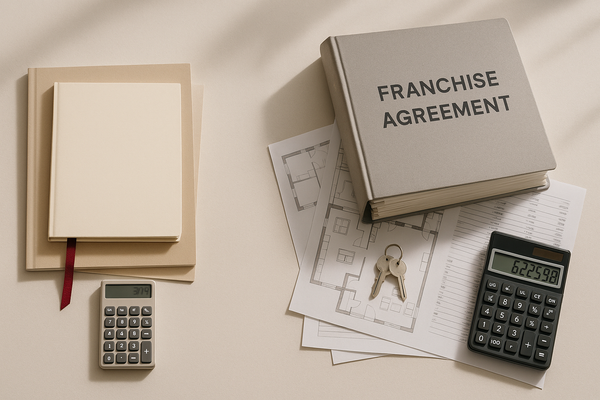
The math behind barre franchising reveals a stark operational divide. Pure Barre franchises require $314,000 to $629,000 in total investment and generate average owner income of approximately $82,000 annually at 22% profit margins. Yet top-performing franchises earn five times more profit than the bottom 25%, exposing how operational execution trumps brand recognition alone.
By contrast, independent owner-operated studios can achieve profit margins exceeding 50%, yielding over $150,000 in annual income. The difference lies in flexibility: independents avoid franchise fees, adapt programming faster, and retain full control over pricing and community-building strategies that drive referrals.
barre3's Women-Led Growth Engine Outperforms Industry Benchmarks
barre3 finished 2024 with 156 units, up 14% from 2023, and $60 million in system sales representing 18.3% growth. All 206 franchisees across the system are women-owned, a demographic alignment that correlates with higher community engagement metrics. barre3's average unit volume reached $413,794, compared to Pure Barre's $345,000 AUV, a 20% revenue advantage per location.
The brand's acquisition strategy reinforces geographic diversification without overleveraging. In 2023, barre3 acquired The Barre Code to enter markets it hadn't penetrated, and in March 2025, acquired Studio Barre in San Diego. Notably, expansion is fueled by cash flow rather than outside capital, signaling sustainable scaling over venture-backed burn rates.
Referrals as the Revenue Multiplier
Approximately 60% of barre3's new client sign-ups come from referrals, a metric that separates thriving studios from marginal ones. This word-of-mouth dominance stems from community-first programming and operational consistency, not discounting or paid acquisition funnels.
Primal Architecture and the Science of Studio Design in 2026
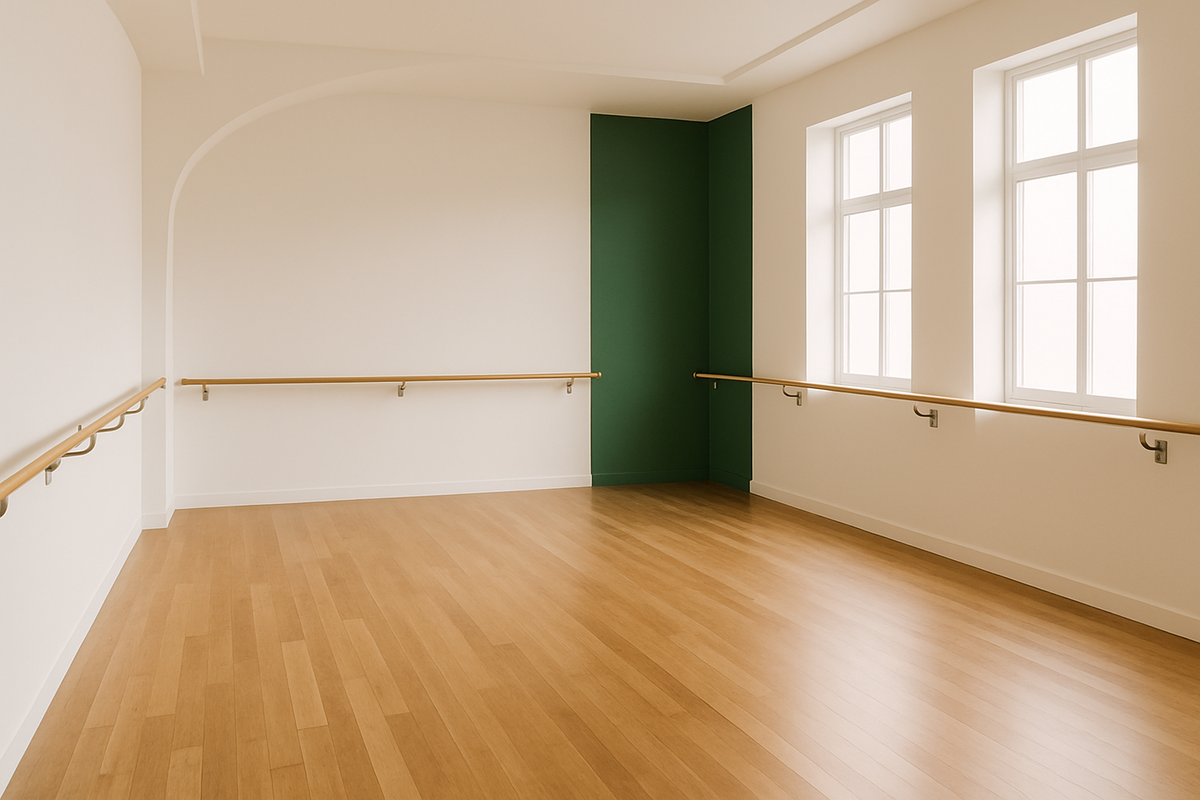
As the global barre studio market reached $1.4 billion in 2024 with projected 8.2% CAGR through 2033, differentiation has shifted from class format to spatial experience. Primal architecture places the human nervous system at the center of design thinking, considering how spaces are physiologically felt through lighting quality, acoustics, spatial clarity, and materiality.
Sophisticated earth tones such as terracottas, soft sages, and warm neutrals are scientifically linked to stress reduction and mental clarity, creating psychological safety that converts trial clients into long-term members. Design strategies include softer indirect lighting, natural materials, clear wayfinding, human-scaled proportions, and reduced sensory clutter to shift the body from vigilance to relaxation before class even begins.
Sound Quality as Competitive Advantage
Studios are incorporating sound-absorbing materials including acoustic panels, textured walls, and heavy rugs to create auditory calm that distinguishes premium environments from budget gyms. In an increasingly competitive fitness landscape, studios are investing in architects and offering spa-like amenities, treating design as revenue infrastructure rather than aesthetic bonus.
Childcare and Hybrid Models Expand the Addressable Market
Some barre3 locations include play lounges for kids, capturing family demographics that competitors exclude by default. Play lounge childcare broadens the potential client pool and provides additional revenue streams that offset real estate costs in high-rent markets.
Technology integration follows a parallel strategy. Digital and hybrid models are the most significant regional trend, especially in Asia-Pacific and Europe, but US studios are adopting selectively. Technology enables online booking, virtual and hybrid classes, fitness tracking, and digital engagement, creating revenue beyond per-class pricing ceilings while maintaining in-studio community as the core product.
Inclusivity Shifts: Male Participation and Functional Fitness Crossover
Studios marketing to men, offering male-only classes, or incorporating barre into functional fitness are capturing new segments. This diversification matters economically: consumers favor boutique fitness over generic gyms, valuing personalized attention, community, and specialized programming, and male participation removes the perceived gender barrier that caps total addressable market in some geographies.
In early 2026, barre3 welcomed new studios with messaging focused on community and the belief that movement brings people together. This intentional framing of inclusivity contrasts with legacy branding that positioned barre as exclusively for women, opening the door to household dual memberships and corporate wellness partnerships.
What This Means for Studio Owners
Editorial analysis — not reported fact:
If you're evaluating franchise investment versus independent operation in 2026, the data suggests three decision factors outweigh brand recognition: your ability to drive referral loops, your willingness to invest in nervous-system-centered design, and your capacity to diversify revenue beyond class packs. The 20% AUV gap between barre3 and Pure Barre, combined with the 5x profit variance within Pure Barre's own system, indicates that operational execution and community infrastructure matter more than franchise scale.
For existing studio operators, the primal architecture trend is not cosmetic. Studios that treat acoustics, lighting, and material palette as retention tools rather than aesthetic choices are likely seeing conversion rate and lifetime value improvements that justify capital investment. If your studio opened before 2024 with standard gym flooring, bright overhead fluorescents, and hard surfaces, a phased acoustic and lighting retrofit may yield measurable membership retention gains within two quarters.
Childcare and hybrid models solve the "I can't make it to class" objection that caps revenue per member. If your average client attends 2.1 times per week and cites scheduling conflicts as the primary barrier to 3+ visits, a play lounge or asynchronous on-demand library may increase utilization without cannibalizing in-studio attendance. The barre3 model proves this is operationally viable at franchise scale, not just boutique independents.
Sources & Further Reading
- Franchise Times: barre3 CEO Leads With Purposeful, Profitable Mindset — November 2025 analysis of barre3's growth strategy, acquisition approach, and women-led franchise model
- Sharp Sheets: barre3 Franchise FDD, Profits & Costs — Breakdown of barre3 investment requirements, average unit volume, and referral-driven acquisition metrics
- Sharp Sheets: Pure Barre Franchise Costs & Profits — Analysis of Pure Barre investment range, profit margins, and performance variance across franchise system
- Studio Growth: Are Barre Studios Profitable? — Independent studio profitability benchmarks and owner income comparisons
- Global Wellness Institute: Wellness Architecture Design Trends for 2026 — Research on primal architecture and nervous-system-centered design principles
- Taleah Smith: Wellness Trends for 2026 — Analysis of earth-tone palettes, acoustic design, and psychological safety in wellness spaces
- Verified Market Reports: Barre Market Size and Forecast — Global market sizing and CAGR projections through 2033
- DataIntelo: Barre Studio Market Report — Consumer preferences, technology integration trends, and competitive landscape analysis
- Growth Market Reports: Barre Studio Market — Regional trends in hybrid models and demographic diversification strategies
- barre3 Blog: New Studio Openings 2026 — Early 2026 expansion announcements and community-focused messaging
Editorial coverage of publicly reported industry developments. Barre Diary has no commercial relationship with any companies named.