The Barre Studio Boom: Expansion & Design Trends in 2026
Barre's $1.2B market is set to double by 2033. How franchises like barre3 are scaling with multi-revenue models, hospitality design, and community-first retention.
Key Takeaways
- Barre market growth: The global barre fitness market, valued at $1.2 billion in 2024, is projected to more than double to $2.5 billion by 2033 with a CAGR of approximately 9.0% beginning in 2026, driven by consumer demand for low-impact, longevity-focused workouts.
- Franchise expansion momentum: barre3 opened 23 studios in 2025 and projects 16 new locations in 2026, while Extraordinary Brands expanded Neighborhood Barre with four new franchise agreements, reflecting strong franchisee reinvestment and profitability.
- Multi-revenue business models: Leading barre franchises now integrate four distinct revenue streams—tiered memberships, digital subscriptions, retail, and childcare services—creating predictable recurring income that differentiates barre from single-stream fitness concepts.
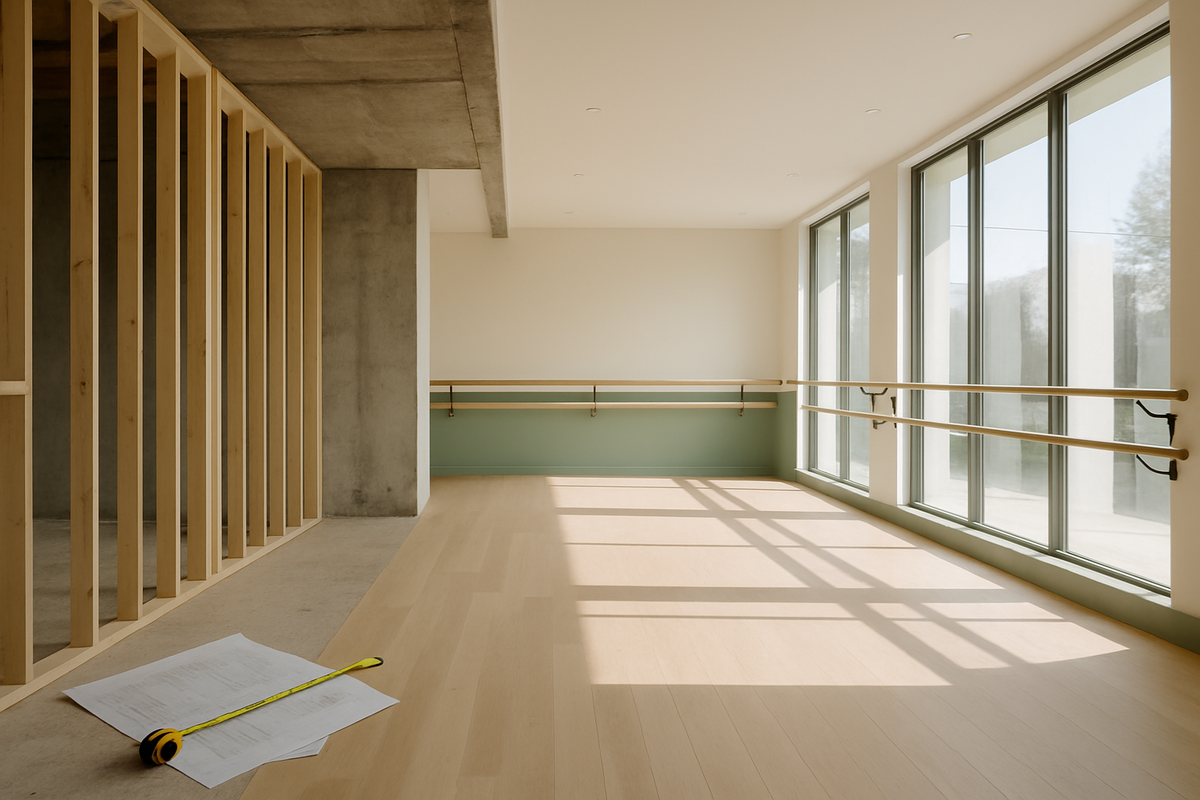
- Boutique design standards: Successful 2026 barre studios emphasize hospitality-driven interiors including upgraded locker rooms with premium amenities, hardwood flooring for upscale aesthetics, dedicated childcare spaces, and café or relaxation areas that position studios as community "third spaces."
- Community as retention driver: High member retention in barre stems from routine class attendance, instructor relationships, and authentic community connection, with operators training staff to deliver personalized, hospitality-level interactions that encourage members to linger beyond workouts.
Why Barre Is Experiencing Double-Digit Market Growth in 2026
The global barre fitness market reached $1.2 billion in 2024 and is projected to more than double to $2.5 billion by 2033, with a compound annual growth rate of approximately 9.0% beginning this year. Industry analysts attribute this surge to shifting consumer preferences away from high-intensity training culture and toward formats that balance challenge with recovery.
Cultural momentum around longevity, nervous system health, and sustainable strength is reshaping the wellness space, and barre studios are positioned at the intersection of these trends. As the first quarter of 2026 unfolds, barre3 is welcoming multiple new studio openings that represent just a portion of growth happening across the category. The brand now operates 204 studios worldwide after opening 10 new locations, and competitor Neighborhood Barre is expanding with four new franchise agreements in markets including Charlotte and Hendersonville.
Franchise Performance Indicators: Repeat Investment and Revenue Diversification
barre3 earned recognition as the #1 barre franchise in Entrepreneur's Franchise 500 and ranked in the top 10% of all franchises nationwide. The brand opened 23 studios in 2025 and projects 16 additional locations in 2026, impacting approximately 1 million clients annually across the United States, Canada, and Chile.
A defining expansion moment came with the Studio Barre acquisition, which brought 10 studio owners and 10 locations into the barre3 network. According to reporting by Athletech News, the company has grown to over 200 locations entirely on cash flow, with no outside private equity or institutional funding. Existing Neighborhood Barre franchisees are choosing to reinvest by opening additional studios, a repeat-investment pattern that Extraordinary Brands highlights as a strong market indicator reflecting franchisee profitability.
From day one, barre3 studio owners have access to four distinct revenue streams designed to work together: tiered memberships (unlimited, 4-class, and 8-class monthly plans), a digital subscription platform integrated with in-studio access, retail product sales, and childcare services through dedicated Play Lounge spaces. This multi-stream model creates predictable recurring revenue and differentiates barre from single-touchpoint fitness concepts. For studio owners, the online platform functions as a retention tool, with members who take class in-studio on Tuesday and stream at home on Thursday deepening their relationship with the brand across multiple revenue touchpoints.
Interior Design Philosophy: From Workout Space to Community Third Place
Successful 2026 barre studios are being conceptualized as "third spaces" where members feel a sense of belonging and connection beyond the workout itself. This philosophy change requires operators to incorporate socialization into studio design, including cafés, relaxation areas, and childcare spaces that clients perceive as extensions of their well-being.
The specific type of flooring matters for brand positioning. According to Architectural Digest reporting on boutique gym design, hardwood creates an upscale look ideal for barre studios, while rubberized flooring signals high-intensity modalities. Floor and wall coverings, joinery, decor, and furniture "can make the difference between a boutique gym and a conventional gym," with locker room areas serving as flagship spaces where quality and exclusivity should be reflected to differentiate from budget fitness centers.
Barry's recently opened its 100th studio on Wall Street, marking a milestone across 19 countries. The 6,888-square-foot space features upgraded locker rooms with Dyson hairdryers and Ouai products, demonstrating how hospitality-driven amenities have become table stakes for premium boutique concepts. barre3 studios are designed with dedicated childcare spaces called Play Lounges, providing an immense value-added service that immediately broadens the potential client pool and creates an additional revenue opportunity many competitors do not offer.
Retention Mechanics: Routine, Instructor Relationships, and Authentic Community
From a business perspective, barre studios offer one of the few models in the fitness industry where there is an ongoing sense of routine and consistency. Members attend several classes each week, develop relationships with their instructors, and form connections with each other. When these dynamics are positively enhanced, they create high levels of member retention and recurring revenue when properly managed.
The U.S. Surgeon General has declared loneliness a public health crisis, and barre3 studios have always offered something boutique fitness rarely does: an authentic community. The most successful operators are elevating the experience with hospitality-driven touches, training staff to make every interaction feel personal and seamless, and creating welcoming environments where people want to linger beyond the 50-minute class block.
Women's health is no longer a niche category. Demand for strength-based, life-stage supportive workouts designed specifically for women is growing faster than the industry has seen in years, aligning with barre's low-impact, nervous-system-friendly format and community-first positioning.
International Expansion: Pure Barre Enters Mexico and Japan
Pure Barre announced it is opening in Mexico, with the first location slated to open in Q1 2025 in Mexico City, and the brand's first location in Japan set to debut later this year, marking Pure Barre's second international market outside of North America. This geographic diversification reflects franchisor confidence in barre's global appeal and the scalability of membership-driven, community-focused boutique models.
What This Means for Studio Owners
Editorial analysis—not reported fact:
If you are considering opening a barre studio or evaluating your current operations, the 2026 landscape offers both validation and a blueprint. The market growth data confirms that consumer demand is real and expanding, not a fad cycle. The repeat franchisee investment at Neighborhood Barre and barre3's top-10% Entrepreneur ranking signal that unit economics can work when operators execute on the fundamentals.
The four-revenue-stream model is the operational lesson to internalize. Tiered memberships alone will not differentiate you in a crowded boutique market. Digital subscriptions, retail, and especially childcare unlock new client segments and create stickiness that single-stream competitors cannot match. If you do not currently offer childcare, the Play Lounge model documented by barre3 is worth studying as a high-ROI, high-differentiation add.
Design and hospitality are no longer optional. Your locker room quality, flooring choice, and whether you offer a place for members to sit with coffee after class directly impact retention and word-of-mouth. Studios that treat design as an afterthought will lose clients to operators who understand they are competing for third-place status, not just workout time. Train your front desk and instructors to deliver hospitality-level service, and measure whether your space encourages lingering or feels transactional.
Finally, if you are a single-studio owner watching franchise expansion news, consider that barre3 grew to 200+ locations on cash flow with no private equity. Scalability is possible in this category when the model is sound. The brands expanding in 2026 have figured out retention, revenue diversification, and franchisee profitability. Study their public playbooks.
Sources & Further Reading
- Global Barre Market Report 2025 via Business Wire—Market valuation, growth projections, and CAGR data for the barre fitness industry through 2033.
- barre3 Welcomes New Studios in 2026 (Athletech News)—Studio count, franchise ranking, cash-flow growth model, and Studio Barre acquisition details.
- Neighborhood Barre Signs Four New Franchise Agreements (Athletech News)—Expansion markets, repeat franchisee investment, and Extraordinary Brands' profitability focus.
- Barry's Brings 100th Location to New York City (Athletech News)—Milestone studio opening, square footage, class formats, and upgraded locker room amenities.
- Pure Barre Announces International Expansion (Athletech News)—Mexico City and Japan market entry timelines.
- How to Design a Boutique Gym (Architectural Digest)—Flooring selection, locker room quality, and third-place design philosophy for boutique fitness.
- U.S. Surgeon General: Our Epidemic of Loneliness and Isolation—Public health context for community-focused fitness models.
Editorial coverage of publicly reported industry developments. Barre Diary has no commercial relationship with any companies named.