Turnout, Alignment & Injury Prevention in Barre Teaching
As barre expands in 2026, instructors face pressure to teach proper form without adequate anatomy training. What does injury-informed barre really require?
Key Takeaways
- Turnout must align hip, knee, and ankle joints simultaneously to distribute forces safely through the kinetic chain; forcing turnout beyond individual range of motion risks joint damage at all three levels.
- Common barre injuries cluster in the lower back, hip flexors, and feet, particularly the metatarsophalangeal (MTP) joint connecting the big toe, often from prolonged barefoot relevé work and forced alignment.
- Leading US certifications now emphasize anatomy modules covering skeletal structure, joint mechanics, turnout from deep external rotators, and postural deviations as applied biomechanics, not abstract theory.
- Individualized turnout assessment (typically starting at 45 degrees) has replaced universal positioning as the instructor guidance standard, prioritizing hip-knee-ankle freedom from strain over aesthetic ideals.
- Studios market injury-informed teaching and modifications as competitive differentiators in 2026, as barre expands into corporate gyms and franchises where instructor anatomy training varies widely.
- Pelvic neutrality and gait symmetry are active debate zones; excessive tucking strains the back and hips during pliés, while asymmetric loading creates disproportionate joint stress and overuse injuries over time.
Why Barre's Low-Impact Promise Requires Anatomy Literacy
Barre has long marketed itself as a low-impact, joint-friendly workout, accessible to "any age and every body." That promise holds true only when instructors understand the biomechanics of what they are cueing. As barre continues its rapid expansion into corporate fitness centers, online platforms, and franchise models throughout 2025 and 2026, the gap between barre's gentle reputation and its real joint-loading demands has become harder to ignore.
The core mechanical challenge lies in turnout. Often when a dancer stands at the barre, their turnout is forced beyond individual range of motion, using body weight and gravity to push the legs toward an "ideal" 180-degree rotation that the joints cannot safely sustain. This is not a ballet-specific problem. Barre classes routinely cue turnout for knee comfort, pelvic control, and balance, but without adequate training in hip, knee, and ankle mechanics, instructors may inadvertently guide students into positions that concentrate stress at vulnerable points.
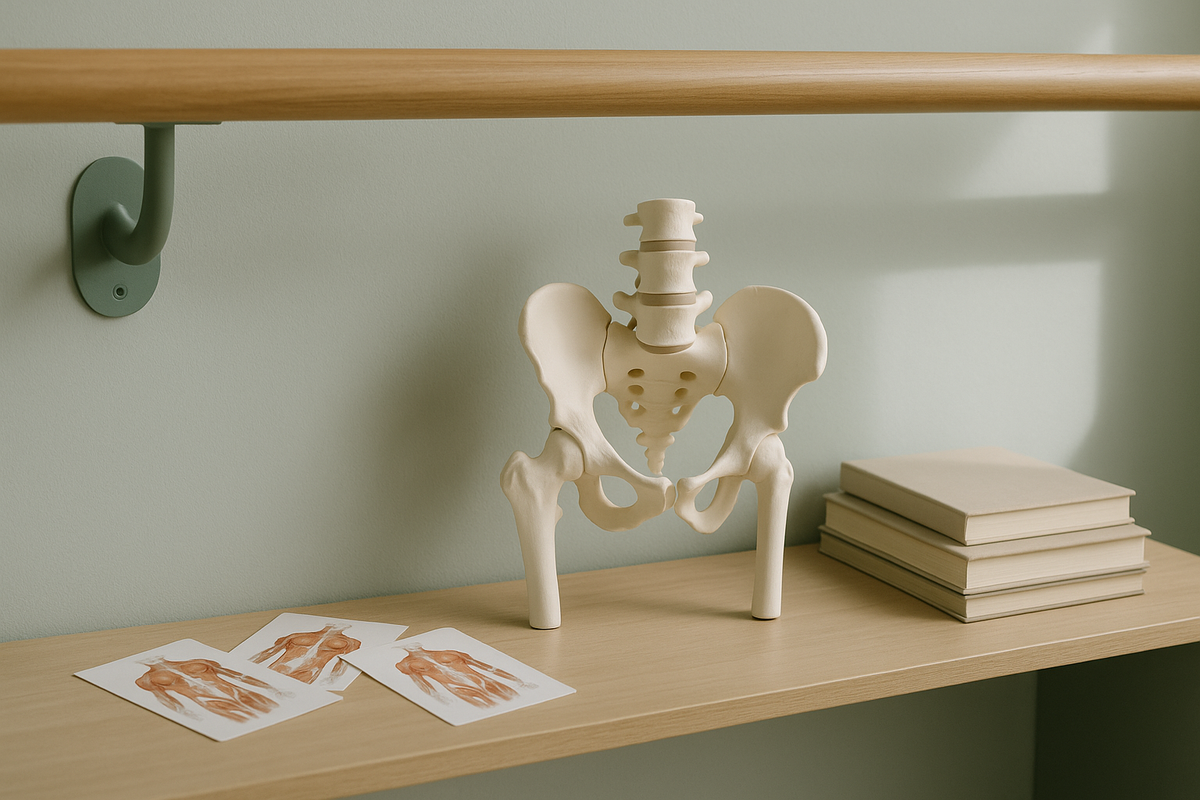
Recent 2025 peer-reviewed research on ballet jumps underscores that turnout is not restricted to the hip joint. Knee and ankle joints also contribute to the ideal rotation between the feet. To maintain turnout during movement, dancers must sustain alignment of the hip, knee, and ankle joints simultaneously to ensure technical quality and a balanced distribution of forces throughout the kinetic chain, thereby reducing injury risk. When one joint compensates for limited mobility elsewhere, the chain breaks down.
Where Barre Injuries Concentrate and Why
The most common barre workout injuries involve straining the lower back, neck, hip flexors, and feet, especially the heel and the metatarsophalangeal (MTP) joint connecting the big toe with the foot. Exercises performed on the balls of the feet, a typical ballet position, stress the foot and other joints. One US podiatrist recounted treating an instructor whose years of barefoot barre workouts left her with severe joint deterioration, ultimately requiring foot surgery. The podiatrist's recommendation: consider wearing supportive sneakers or dance shoes for barre class instead.
Lower-body injuries often stem from forced turnout and excessive pelvic tucking. Instructors now counsel staying away from an excessive pelvic tuck and keeping the spine long, particularly during pliés, to avoid straining the back, hips, or knees. Pronounced gait asymmetry compounds the problem: asymmetry often leads to disproportionate loading, where one leg endures greater mechanical stress, manifesting over time as overuse injuries affecting joints, tendons, and soft tissues.
The Barefoot Question and Structural Load
Barre's barefoot tradition, borrowed from ballet and modern dance aesthetics, has functional consequences. Without arch support or cushioning, isometric holds and pulsed relevés transfer ground reaction forces directly through the metatarsals and ankle. For participants with existing foot mechanics issues, flat arches, or prior injuries, this can accelerate joint wear. The podiatry community has begun to flag barre as a contributor to chronic foot pain, particularly among instructors teaching multiple classes weekly.
How Certifications Are Evolving to Close the Knowledge Gap
Major US barre certifications have responded by adding or emphasizing anatomy modules. The International Barre Fitness Association (IBBFA) Certified Barre Instructor curriculum now covers skeletal structure, joint mechanics, muscular function, postural deviations, and how each barre exercise loads the body. It includes foot anatomy (plantar flexion, dorsiflexion), turnout mechanics from the deep external rotators, pelvic positioning, and core engagement, presented not as abstract concepts but as applied to what happens in class.
IBBFA offers specialized training in hip, foot, back, and shoulder mechanics with Dr. Hallie Edmonds. Barre Intensity provides educational training clips covering anatomy and alignment principles, and Barre Vida's certification includes pedagogy, injury prevention, modifications, verbal and hands-on corrections, and advanced techniques. Balanced Body's barre certification for Pilates instructors similarly integrates biomechanics.
This shift reflects an industry-wide recognition that cueing "tuck your pelvis" or "turn out from the hips" without understanding joint mechanics, muscle recruitment patterns, and individual mobility limitations creates liability and harm. Certification bodies are moving toward treating barre as a loaded movement practice that requires the same anatomical rigor as personal training or physical therapy-adjacent modalities.
The Shift Toward Individualized Alignment and Injury-Informed Cueing
Leading instructors now counsel individualized turnout rather than universal foot positioning. The updated guidance: start your feet at a turnout of 45 degrees, then adjust either less or more to make your hips, knees, and ankles feel free from strain. Barre turnout and hip alignment come from hip external rotation, with foot angle showing the result of what your hips can control in that moment. Safe turnout usually looks like a stance you can hold steady through pulses, holds, and slow repetitions without feet rolling, knees drifting inward, or the low back gripping.
Major studios have adopted this language. Bar Method locations advertise highly trained instructors who customize barre exercises to ensure they are safe and effective for any age and every body, including modifications for prenatal clients and students with injuries. Barreworkout.com similarly markets biomechanics-informed barre with a focus on alignment and injury prevention as a core differentiator. Pure Barre franchises increasingly emphasize instructor anatomy education in onboarding.
Floor Barre as a Lower-Load Alternative
The primary benefit of floor barre is that it causes less strain on the hip joints, removing gravity's contribution to forced turnout. For populations with hip impingement, labral tears, or chronic low-back pain, floor barre offers a way to train similar movement patterns with reduced axial load. Some studios now offer floor barre as a separate class track or integrate supine sequences into traditional standing barre formats to balance joint loading across the hour.
What This Means for Studio Owners
Editorial analysis, not reported fact:
Studio owners face a professionalization moment. The barre market in 2026 is crowded, and differentiation increasingly hinges on instructor expertise and injury outcomes rather than playlist curation or studio aesthetics. If your instructors cannot assess a student's hip external rotation range, recognize compensatory knee valgus, or modify relevé work for a participant with plantar fasciitis, you are operating with reputational and liability risk.
Invest in continuing education that goes beyond choreography. Require anatomy refreshers annually. Build intake protocols that ask about prior injuries, foot pain, and hip or knee issues, and train instructors to use that information in real time. Normalize the use of props (blocks, sneakers, cushioned mats) and eliminate language that frames modifications as "easier" rather than biomechanically appropriate. Create space in class for individualized turnout assessment at the start of each session, especially for new students.
Market your studio's injury-informed approach explicitly. In a saturated market where boutique gyms, Equinox, and YouTube all offer barre, your competitive edge is safety and longevity. Prospective students are increasingly literate about joint health and wary of workouts that promise transformation through pain. Show them you understand the mechanics of what you teach, and they will stay longer and refer more consistently.
Sources & Further Reading
- Peer-reviewed 2025 research on ballet jump biomechanics and turnout alignment, published in a National Institutes of Health database, analyzing hip-knee-ankle kinetic chain mechanics.
- Research on gait asymmetry and joint loading in dance, covering how disproportionate mechanical stress leads to overuse injuries.
- IBBFA Certified Barre Instructor curriculum overview, detailing anatomy modules including joint mechanics, postural deviations, and applied biomechanics.
- Barre Intensity online instructor training and certification, offering educational clips on anatomy and alignment principles.
- Barre Vida certification program, covering pedagogy, injury prevention, modifications, and hands-on corrections.
- Remix Fitness guide to individualized barre turnout and hip alignment, explaining hip external rotation and safe stance mechanics.
- Podiatrist perspective on barre-related foot injuries, including MTP joint stress and the case for supportive footwear.
- Yahoo Lifestyle injury-prevention tips for barre participants, covering pelvic positioning and plié mechanics.
- Wikipedia entry on Floor-Barre, describing the technique's reduced hip joint strain compared to standing work.
- Bar Method San Francisco FiDi studio page, illustrating industry marketing of customized, injury-informed instruction.
Editorial coverage of publicly reported industry developments and peer-reviewed research. Barre Diary has no commercial relationship with any companies, certifications, or studios named in this article.